Showing posts with label lexicon. Show all posts

2010-11-13

Ghost words revived in Allatius

The canon (patchwork though it is) of Greek lexica that I described a while back has a fair representation of German scholarship: Lust Eynikel & Hauspie, Bauer Danker Ardnt Gingrich, Trapp.

The oddity is that German scholarship wasn't represented there for the Classical period. Yes, LSJ is a major work, and DGE is more comprehensive still (if only I would live to see it completed). But it's odd that the Germans didn't corner the market in Ancient Greek lexicography in the 19th century, when they ruled Classical philology.

As it turns out, Wilhelm Pape's Handwörterbuch der griechischen Sprache (revised by Max Sengebusch in 1880) is competitive with LSJ, with 99,000 headwords against LSJ's 116,000. Given that LSJ, published in 1940, covers an additional 60 years worth of papyri and inscriptions, Pape's dictionary has nothing to be ashamed of.

I've recently had occasional to compare it against the other lexica of Greek: I keep trying to fill in gaps in lexical coverage hither and thither—for reasons that should be obvious to the regular readership I've been neglecting. Of those 99k, 545 lemmata are absent from the other lexica, but still turn up in the TLG corpus. That's a lot of lemmata, given that dictionaries have been making a point of filling in each other's gaps (Trapp in particular).

There are a few reasons for Pape's 545 not to have been recorded anywhere else. Pape has not picked up the allergy to Late Antiquity that LSJ did. This allergy has meant that pagan late antiquity is the least well covered period in Greek lexicography. As more inscriptions and papyri turned up, LSJ displaced late entries with the newly found earlier entries. With these late entries attributed to no author more specific than "Eccl." or "Byz.", LSJ wasn't desperate to hold on to them, to begin with.

Pape has the same dismissive "Byz." attribution for its late entries; but it has not undergone the same kind of cull—to the benefit of the Greek Anthology and Oribasius.

And, to my surprise, of the scholiasts. The scholiasts are something of a discomfort to lexicographers. Scholiasts provide their own definitions of Classical words, so Classical lexicographers care about the words the scholiasts use. But scholiasts explain Classical words to post-Classical audiences, by using decidedly post-Classical vocabulary. Which means that documenting the scholiasts puts Classicists in the Mediaeval Greek business. (Not always wisely, as seen with LSJ's mishandling of στοίχημα "wager".)

There is a smaller group of lemmata in Pape which the other lexica overlook for different reasons—and which by rights should not be turning up in a Classical corpus at all. The text of the Classical canon is described by lexicographers following standard editions; but the manuscripts they work from had a lot more variability than the lexicographers now need to account for. Our modern edition of Pindar has established that Pythian Ode 8.74 reads
πολλοῖς σοφὸς δοκεῖ πεδ’ ἀφρόνων

to many he seems wise among fools

So we are not interested that in some mediaeval manuscripts, the last two words πεδ’ ἀφρόνων "with the non-prudent" were run together as πεδαφρόνων "of the after-prudent"—or, as Pape has it:
πεδά-φρων, ον formerly appeared in Pind. P. 8.74, and was explained as Aeolic for μετάφρων, someone who is wise later, after the deed; Böckh writes it as πέδ' ἀφρόνων.

Once Böckh settled that πεδάφρων did not exist in Pindar, πεδάφρων ceases to be of interest for Classicists.

But the people who read those mediaeval manuscripts thought πεδάφρων existed. The scholia are commentaries on mediaeval versions of the Classical texts, and reflect the mediaeval understandings of those texts. If the scholia describe these misreadings, they perpetuate them, even after we have cleaned up the source text (to our best judgement). So our Thucydides 8.91.3 now reads
ἦν δέ τι καὶ τοιοῦτον ἀπὸ τῶν τὴν κατηγορίαν ἐχόντων, καὶ οὐ πάνυ διαβολὴ μόνον τοῦ λόγου

This was no mere slander, there being really some such plan entertained by the accused.

Somewhere along the line διαβολὴ μόνον "mere slander" was metanalysed as διαβόλιμον ὄν "being liable to slander". The scholiast accordingly tries in the margin to make sense of the word they saw in the main text. Our main text is emended, but the margin still counts as text in the Greek corpus:
διαβόλιμον ὄν: ἤτοι καὶ οὐκ ἔχοντος τοῦ λόγου διαβολὴν (?), οὐδαμῆ εἶχεν ὁ λόγος διαβόλως (?)
being liable to slander: namely, not having slander in speech (?); the speech was in no way slanderous (?)

(You can thank Karl Hude, who edited the scholia, for the incredulous question marks.) Thomas Magister also recorded the word in his "Selection of Attic nouns and verbs"—although he was reluctant to go so far as to commend it:
Διαβόλιμον Θουκυδίδης λέγει τὸ διαβεβλημένον· καὶ οὐ πάνυ διαβόλιμον ὂν ἀπὸ τῶν Μεγάρων τὴν Σαλαμῖνα παραπλεῖν. σὺ δὲ διαβεβλημένον λέγε.
liable to slander is what Thucydides calls something slandered. "Without it being liable to slander that they should sail by from Megara to Salamis". But you should say "slandered".

You should also not trust Thomas' reading of Thucydides; the sailing from Megara to Salamis is from Thucydides 8.94.1, a few pages on, and the mission talked about as διαβόλιμον was heading to Eetonia near Piraeus.

The mediaeval manuscripts were not just read by the Byzantine scholiasts and lexicographers, though. The manuscripts—and the scholia and lexica explaining them—were how the Byzantines learned the Classical language, on which they modelled their own literary language. That means that διαβόλιμον is of interest in the study of later Greek. Sure, it's a ghost word, like dord, and it was never part of any spoken form of Greek.

But if the text of Pindar that Byzantine writers read said πεδάφρων, then writers would assume it to be real enough: no less real than μετάφρων, which they could have coined in their own, Atticist learnèd Greek. No less real, for that matter, than embiggen.

The main reason these ghost words were taken up was that the ghost words did make sense on their own: they could be analysed according to the rules of Greek compounding. If you know how Classical Greek works, you already know that διαβόλιμον really does mean "liable to calumny", because -ιμος is a real suffix (cf. ἀγώγιμος "carriable"); and once you know that πέδα is Aeolic for μετά, you know that πεδάφρων must somehow mean "after-mined" (cf. ἔκφρων "out of one's mind"). The misreading of διαβολὴ μόνον or πεδ’ ἀφρόνων is not alien to spoken language after all; it's the same metanalysis that gives us adder or newt—or helipad or pollute. So it may look like Byzantine Greek writers were asking for this kind of bogosity, by slavishly relying on flawed manuscripts for their models; but what they came up with was not that different to what spoken language has done elsewhere.

And so it is no surprise that πεδάφρων shows up in the TLG too, even if it is not in the TLG's Pindar. It turns up in someone who has read Pindar in those corrupted manuscripts, and is happy to show his reading off. But this is not a scholiast or lexicographer. This time, it's a reader who is producing literature of his own: Leo Allatius, in his poem Hellas, written in the 17th century. (A couple of centuries before Böckh.)

My Ancient Greek isn't as good as I might make it seem, and Allatius' run-on syntax doesn't make it easier; but this is how I think he uses πεδάφρων—in the same genitive πεδαφρόνων as in the pre-Böckh Pindar.
ΕΛΛΑΣ γάρ εἰμι, τέκνον, ΕΛΛΑΣ, ἧς κλέος
ἄσβεστον ἔργοις τιμίοις πεπραγμένον,
διελθὸν ἔπτη πρός τε γαῖαν, καὶ διὰ
πόντου πέρασσε νυκτός, ἠδ’ ἠοῦς λάχος,
ἠδ’ εἴ τι ποῦ ἐστι λαιά, κἀπιδέξια
συμφραδμόνεσσι τηλόθεν γ’ ᾠκισμένον,
πεδαφρόνων γὰρ οὐδὲ μικρόν μοι μέλει,
ὃ ΓΑΛΛΙΚΟΙΣ στήθεσφι τοῦδ’ ἄχρις χρόνου
ἄφθαρτον ἐμπεφυκὸς ἀγλαΐζεται. (vv. 196–204)
For I am Hellas, child, Hellas, whose inextinguishable
glory, carried out in honourable deeds,
is past, has crouched down to the ground, and has
passed through the sea of the night: this is the doom of the dawn;
but it is also what is there in a place, that is dwelled in
left and right by counsellors from afar,
(for I do not care the slightest for those wise after the fact):
a thing which is splendid in Gallic breasts
growing incorruptible to this day.


Pindar is not the only Classical author whose fractured words turn up in both Allatius and Pape. ναυβάτης "ship-walker" turns up in several Classical sources—Aeschylus, Sophocles, Euripides, Herodotus, Thucydides, Xenophon). The most obscure source is Lycophron:
καὶ τὰς Ἐρεμβῶν ναυβάταις ἠχθημένας προβλῆτας ἀκτάς (vv. 827–828)
and the jutting shores of the Erembi, abhorred by mariners

The TLG's edition of Lycophron dates from 1964; Pape in 1880 records ναυάτης as Lycophron's reading, and also has it as a variant reading in Euripides, IT 1380. Our Lycophron and Euripides have now been cleaned up to read ναυβάτης; Allatius' had not, so that his poem has the first appearance of ναυάτης in the TLG corpus:
Ἀργοῖς ἐρετμοῖς πόντος, εἰ καὶ μαίνεται,
κλύδωνί τ’ οἰχθείς, ψάμμον ἐκβράζει βυθοῖς,
βύκτας ἀέλλας ἡμερώσας ναυάτης,
οἰηΐοις τε νηὸς ἰθύνας δρόμον,
πρὸς ὅρμον ἔλσεν ἀσκηθὴς σόον σκάφος. (vv. 233–237)
Though the sea rages, and throws up sand from the depths,
departing with slow oars and through the billow,
the mariner calms the blustering whirlwind,
and straightens his course with the ship's rudder,
to shelter the vessel unscathed in its anchorage.

(If you go searching the TLG for ναυατ-, btw, ignore Ναυάται in Germanus I, Narratio de haeresibus et synodis ad Anthimum diaconum 48. His Nauatae predate Allatius by eight centuries, but they are Novatianists, a sect, as you would expect in an anti-heretical text.)

The misreading of ναυβάτης as ναυάτης is unsurprising: they sound the same in Modern Greek, [naˈvatis]. Unlike πεδάφρων or διαβόλιμον, ναυάτης doesn't mean anything on its own in Greek. It was taken up because it still looks like another real word of Greek, ναύτης "shipper = sailor", which has survived into the Modern language. Copyists simplified ναυβάτης into ναυάτης, and then figured that Euripides was just using ναύτης with an extra α in the middle. The Ancients did strange this like that, after all, didn't they?

(The Baroque did strange things too, just in a different way.)

Outside the lexicographers and scholiasts, there aren't many instances of such rejected readings turning up in literary Greek. ἠπίαμα "cure", as defined in Pape, is a metanalysis of Herodotus 3.130 ἤπια μετὰ τὰ ἰσχυρὰ προσάγων "supplying both mild and strong (medicine)"; the misquote turns up in Constantine Porphyrogenitus De virtutis et vitiis II p. 11, and Suda, delta 442; but that doesn't count as new usage. The run-in εὐ ναιόμενος "well-dwelling" of Iliad 14.255, which Pape allows as a single verb, turns up as a distinct verb not just in commentators, but also in Galen (Kühn 18b p. 763). But that's it. (I thought I saw an instance in Gregory of Nazianzen's aping of Homer, but I can't find it.)

That may mean that Allatius' Greek is more derivative than his forebears; I have my doubts, given how Byzantine literary culture worked. Since I did not track down words already defined in Lampe and Trapp, it's likelier that any earlier such repurposings had already been dealt with there.

… And so I return to blogging. Missed it.
...Read more

2010-03-29

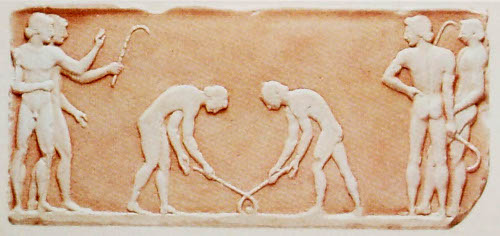
κερητίζειν: Ancient Greek Field Hockey?

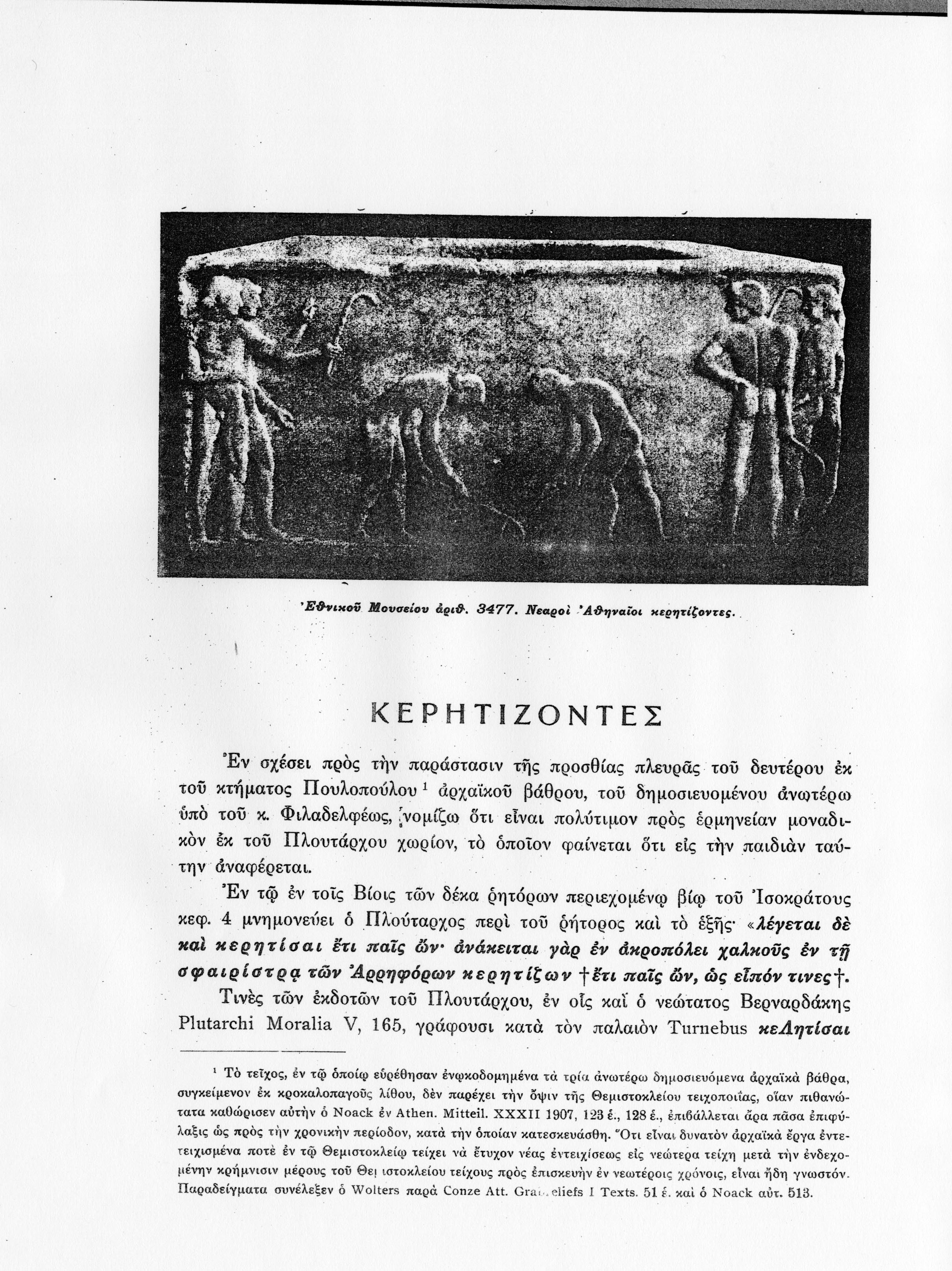
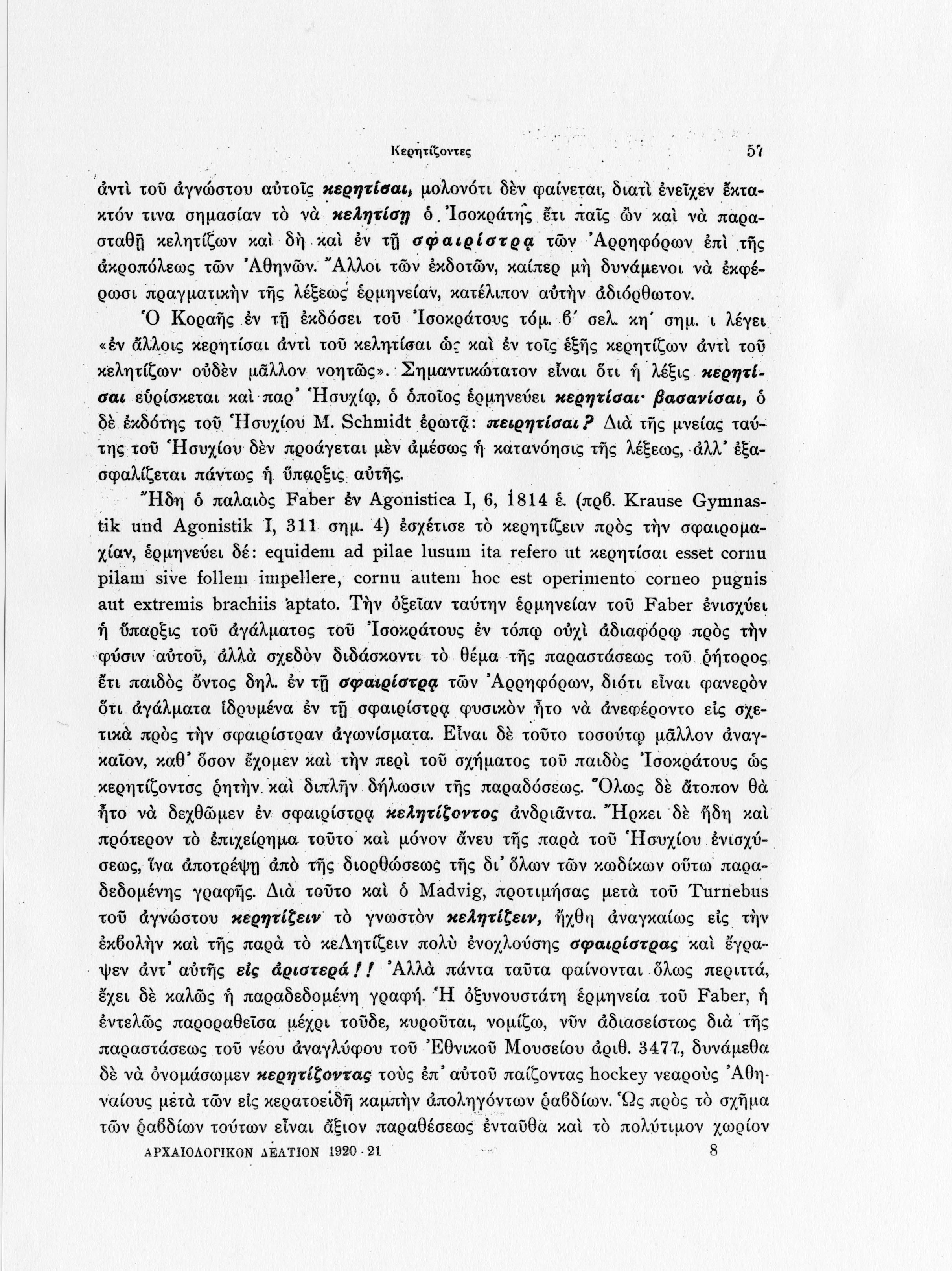
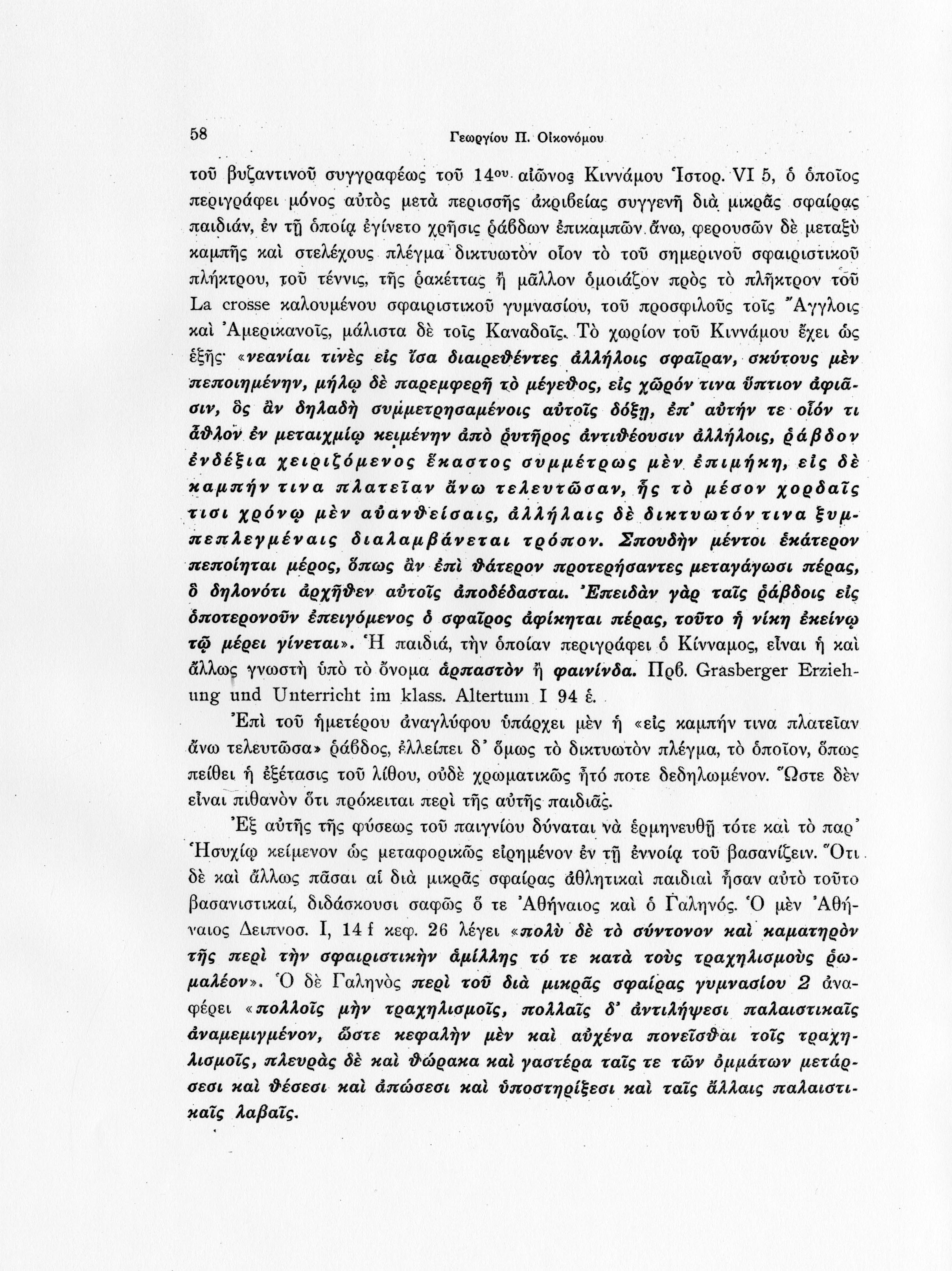
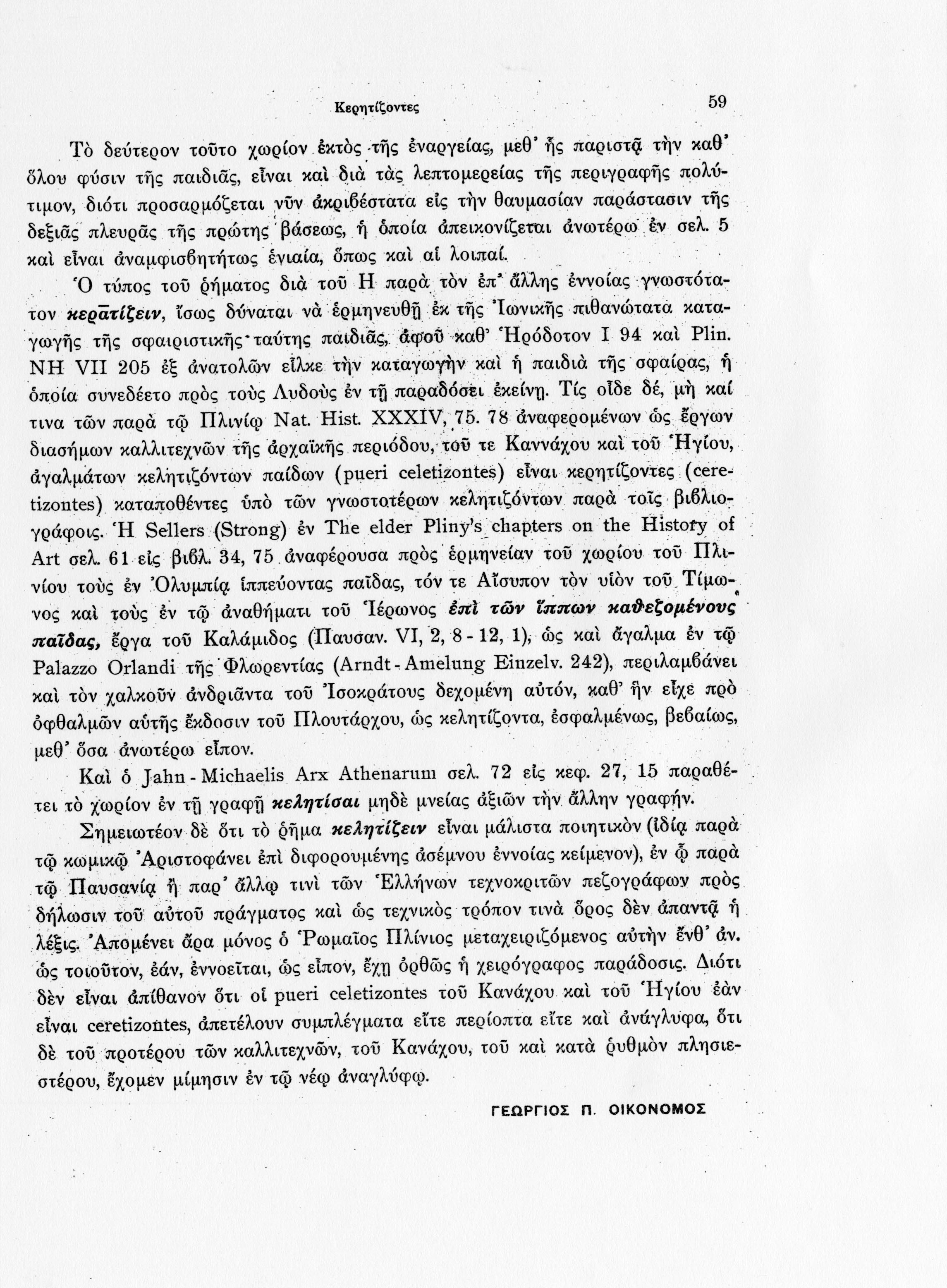
A brief note for the Classicists still reading, despite the deluge of very very Late Greek here—to point to a post at Nikos Sarantakos' blog, jointly researched with commenter π2, on whether the infrequent verb κερητίζειν refers to an Ancient Greek sport similar to field hockey. This has been claimed by the archaeologist Georgios Oikonomos in the 1920s, and the claim is repeated by the Greek Hockey Association—along with an relief clearly showing a kind of hockey being played in antiquity.

[Oikonomos, G. "Κερητίζοντες." Archaiologikon Deltion 6 (1920-1921): 56 -59: pp 56 57 58 59]
The verb is very rare (Hesychius with an unclear gloss, Pseudo-Plutarch Lives of the Ten Orators 839c, where most editors emend it to κελητίσαι, κελητίζων "ride a horse": "He is said to have run a race on a swift horse"). Sarantakos and π2 are unconvinced by Oikonomos' argument. As often happens, someone makes a claim in scholarship, and it's taken up without much question elsewhere, because peer review does not catch everything—and didn't apply to everything either.

The post's executive summary, as they give it:
  • Yes, the Ancients played ball games.
  • There probably was a word κερητίζω, but we don't know what it means.
  • There is a chance that κερητίζω means a ball game.
  • G. Oikonomos conjectures that that ballgame is the ballgame shown in the relief. But it could be any ballgame, e.g. a kind of tennis or rugby.
  • His conjecture is nonetheless accepted by most scholars of Ancient sport—though the the conjuncture is forced in his opinion.
  • But the association's motto κερητίζειν ἐστι τὸ μετὰ τέρψεως ἀθλεύειν "playing hockey means having fun in sport" is not ancient: it is probably made up based on a general comment on ball games by Galen (de parvae pilae exercitio, Kühn vol. 5 p. 900): τοῦτο μὲν δὴ κοινὸν ἁπάντων γυμνασίων τῶν μετὰ τέρψεως, ἄλλα δ’ ἐξαίρετα τῶν διὰ τῆς σμικρᾶς σφαίρας, ἃ ἐγὼ νῦν ἐξηγήσομαι "that is what all fun exercises have in common; but there are other excellent exercises with a small ball, which I will now expound on."

Maximus of Gallipoli: linguistic commentary

I posted an excerpt of the 1638 New Testament translation by Maximus of Gallipoli last week. I've been rather busy and will continue to for at least a fortnight, and the promised linguistic commentary on the text has held me up from writing other stuff. Well then, here it is. It's a lot of information, and may lapse into being dry, but if you're looking at some indication of how Greek has changed between 70 and 1638—and more to the point, between 1638 and 2010, this might get you started.

What is interesting to see is that quite often, Modern Greek has evolved backwards since 1638: expressions that were acceptable in print then are ineptly folksy or even unheard of nowadays. That's because Contemporary Standard Modern Greek (which I keep abbreviating as CSMG) has been profoundly affected by Puristic Greek, and its studied avoidance of hitherto colloquial forms. To the extent, as you'll see, of banishing words spoken since Homer, precisely because they had had the bad taste of surviving in use in the vernacular.

Phonology


The aphaeresis of Modern Greek (deleting initial unstressed/e, o, i/) hasn't been followed consistently in this text: εβγαίνοντας for Modern βγαίνοντας (1) (the Ancient is ἐκβαίνοντος, so this isn't an obvious archaism); οπού for Modern που (often; που only in 14); ετούτος (2, 4, 7, 9, still heard on occasion), ειπέ (4), ημπορούν (9), υπάγουν (11), ειπείτε (11), ιδείτε (14), εγκαστρωμένες (17), οπίσω (16), ημέρες "days" (17, 19, 20, may be archaism), ολιγόστευσε (20), ειπεί (21), and augments: ερωτούσαν (3), εδιάλεξε (20), εκόντεψε (20).

The aphaeresis resulted in some forms alternating o- for ε-: ομπροστά "before" (9) < Ancient ἔμπροσθεν, in CSMG just μπροστά. Unstressed initial ε- is assimiliated to απάνου "on" < ἐπάνω (2); the text also has αναντίαν (Ancient and CSMG εναντίον) "against" (9).

There are final /n/s throughout the text that CSMG would drop. This happens throughout published Early Modern Greek, and does not necessarily mean they were a feature of the spoken language.

Διατί "because" and δια "for" appear in their ancient forms, whereas in CSMG they are reduced to γιατί, για ([jati, ja]—i.e. the initial /ð/ has been deleted). Not necessarily an archaism.

The /ɣm/ cluster is simplified to /m/ in διαλεμένους "elect" (20, 22); in CSMG this is no longer allowed because of Puristic influence (Google: διαλεμένους::διαλεγμένους : 123::1670—the instances of διαλεμένους are almost all citations of Makriyannis).

Morphology: Inflection


Δες (1) for "look!" is a surprise: the shibboleth of Thracian Greek (including Constantinopolitan) is that their aorist of είδα has a [j], διές. Maximus may have been nudging his Greek in a more standard direction, realising that διές was a localism.

Τες (2, 17, 19) as the accusative plural feminine article is an older form, now mostly displaced by τις. (Google τες γυναίκες::τις γυναίκες "the women": 1190::411,000, and the hits for τες on the first page are older literature or dialect).

Modern Greek often changes -ω at the end of adverbs to -ου, though in CSMG this is stigmatised: απάνου "on" (2, 12) < ἐπάνω, Modern επάνω ~ απάνω ~ πάνω.

τίποτες "something" (15) has an added final /s/, by analogy with other adverbs ending in -ες. τίποτες is now considered dialectal, but turns up online enough to suggest some more general non-standard use (Google: 23,500 τίποτες to 4,610,000 τίποτα, 8,650,000 τίποτα)

The genitive is used after adverbs, where CSMG would use από "from": αγνάντια του ιερού "opposite the temple" (3). (I discuss the odd πέτρα απάνου την πέτραν below.)

The imperative ειπέ "say!" (4) is Ancient, and common in Early Modern Greek; CSMG has gone to πες, with -ες imperatives formed for a small class of monosyllabic verb stems. We have already seen δες "look!" follow that same new pattern (1).

A third member of the class is μπες "go in"; its subjunctive is now μπει, dropping its original unstressed /e/ (εμπεί < ἐμβῇ). This text has the regularised accentuation έμπει (15), so that the /e/ is not dropped. CSMG has not taken up this innovation, but other dialects have, and it seems to have some non-standard use online (971 hits on Google, not all of them literary.)

The Mainland 3rd pl present ending -ουν (for Ancient and Cretan -ουσι) is used: θέλουν "will" (4, 6), λέγουν "they say" (6), ημπορούν (9), υπάγουν (11), παραδώσουν (11), πλανούν (22), σύρουν (22)—but θέλουσι "will" (6, 8, 22), απολογηθούσι (9), φεύγουσιν (14). Using the two variants in the same sentence with the same verb (6) is nothing unusual: Modern Greek had not yet been standardised.

The plural σύγχυσες "confusion" (8) uses a first declension plural on what was historically a third declension noun in -ις. This usage is nowadays lambasted as "extremist Demotic", and only Psichari's circle supported it in recent times. But this usage merely reflects what had happened in the vernacular, with the third declension eliminated in all contexts and replaced by the first declension. (ερημώσεως "desolation" (14), OTOH, is in the Ancient 3rd declension.) The CSMG situation, with 1st declension singular and 3rd declension plural for historical -ις nouns, reflects an awkward compromise: people resisted making -ις nouns consistently 1st declension in CSMG, because they are mostly abstract nouns, and hence learnèd. Noone blinks at the plural ράχες of the non-learnèd ράχη < ῥάχις "back".

Early Modern Greek formed its first declension masculine plural as -άδες: αυθεντάδες (9). CSMG has rolled this plural back in favour of generalising the feminine plural -ες, although -άδες survives in colloquial use. The rollback is only 20th century, and indeed the Puristic plural in -αί held out for a long time in spoken use—with -άδες felt too colloquial for words like "professor", and -ες too artificial.

Different dialects of Greek have moved -εω verbs across to the -αω paradigm to different extents, so an -εω in the text which is an -αω verb in CSMG does not prove archaism. The text has the original -εω forms for λαλείτε "speak" (11, but this rarely goes to λαλάτε: Google 5360::747); and for παρακαλείτε "ask" (18: παρακαλείτε::παρακαλάτε Google 22,200::44,000, and the former count includes a lot of Ancient Greek)

Morphology: Stems


The aorist γένει "happen" (4, 7) survives in dialect, but CSMG has made the stem consistent with the present stem, and uses γίνει. (The resulting ambiguity is dealt with in a curious way: the present is middle voice, the past is active; so Ancient γίγνομαι, ἐγενόμην is now γίνομαι, έγινα. There is no Aorist Middle in Modern Greek, but the normal outcome would have been to switch to the Aorist Passive, as in κοιμῶμαι, ἐκοιμησάμην "sleep" > κοιμάμαι, κοιμήθηκα.)

The text already uses the modern είναι "is", rather than Early Modern έναι.

The aorist πλανέσει (5) for Ancient πλανήσει (6) is a vernacular change first seen in φορέσω "wear"; the verb does not seem to be used in colloquial CSMG in the aorist.

κάμει "does" (7, 22) is a Modern sense (the ancient verb κάμνω means "to toil"); its /m/ variant is no longer used, and CSMG instead uses κάνω.

πάγει "take, go" (9) still has its original /ɣ/ < ὑπάγει "lead"—so υπάγουν (11). Ιn Modern Greek /ɣ/ is deleted between a vowel and a verb ending. So also λέγει "he says" (1), which in colloquial CSMG is λέει, and φυλάγετε "guard" (9) (Ancient φυλάσσετε, the -γ- is analogical from the aorist φυλάξω). Ιn CSMG φυλάγετε is further reduced to φυλάτε. (Dropping the /ɣ/ turns -αγω verbs into -αω verbs.) The form λέγει at least is still acceptable in CSMG because it was in Puristic; πάγει has no such warrant, and is not now used.

The future construction permits the survival of the Early Modern Greek infinitive of "be", είσται (11, 13). This has not survived into CSMG: the perfect tenses still use an infinitive-equivalent, but είμαι does not form a perfect in CSMG (*έχω είσται "I have been"), because the perfect needs an aorist (perfect) infinitive, and "be" is imperfective.

Syntax


The adverbial participle is used productively: Και εβγαίνοντας από το ιερόν ο Ιησούς "and as Jesus was coming out of the temple" (1). My own hunch is that this was not the most vernacular syntax possible, and that explicit conjunctions were more colloquial; but that's a hunch, and the participle is still around in that role. (The adjectival active participle OTOH is now ossified, surviving only in lexicalised noun. So η μαυροφορούσα "black-wearing (woman)" does not imply a masculine ο *μαυροφορόντας.)

Maximus of Gallipoli was a speaker of Northern Greek, so he used the accusative instead of the genitive for indirect objects: λέγει τον "told him" (1, 2)

The text uses the Finite θέλω + Infinitive Verb construction (2, 4, 6, etc) to express the future, and the corresponding Finite Imperfect ήθελα + Infinitive (20) to express conditionals. The Modern construction with θα + Finite Verb dates from around 1700. The alternate future with μέλλω "is destined to" is also used (4), but should be taken as an archaism. The colloquial future έχει να "it has to" (19) is now used almost always as it is here, in the fixed expression έχει να γίνει "there will be", predicting something momentous positively or negatively.

The earlier να future may be lingering in να μην μεριμνάτε πρωτύτερα τι να ειπείτε "don't study ahead of time what you might (will) say" (11); in CSMG this would θα πείτε. The subjunctive used instead does make sense in CSMG, but CSMG treats such indirect questions as indicative, and the brevity of να may have helped it survive here. There is an even stronger survival in μηδέ να γένει "and nor will there be" (19): CSMG does not allow a subjunctive ("??nor might there be"), and the survival may be a fixed expression involving "nor".

In Modern Greek, απάνω "on" is an adjective, and can only act as a preposition by combining it with σε "to": έθνος απάνου εις άλλο έθνος "nation on to other nation = nation against nation" (8). πέτρα απάνου την πέτραν "a stone on a stone" (2) is treating απάνου as a preposition on its own; that's odd enough I suspect an error. Ancient Greek did treat ἄνω as a preposition, and Kriaras' dictionary of Early Modern Greek has some comparable instances with επάνω—but they all take a genitive, which makes them archaisms: this takes an accusative, making it a Modern preposition.

The text has a subjunctive relative clause, indicating intensional reference (the clause defines what is referred to), as is common in Modern Greek (and indeed Ancient too): πέτραν οπού να μην χαλασθεί "(any) stone which will not be ruined" (2), as distinct from "a stone which will not be ruined".

Subjunctive relative clauses take να in Greek, as the class of connectives that can precede a subjunctive verb is limited. In (11), the relativiser οπού introduces a subjunctive directly: εκείνο οπού σας δοθεί "that (anything) which is given to you". This usage turns up before the modern standard, but is quite rare in CSMG. A reason the construction may formerly have been more common is that Early Modern Greek and dialect allow οπού as a headless relativiser, "whoever" (surviving in CSMG only in the proverbial οπού φύγει φύγει "whoever leaves, leaves = it's everyone for himself"). Headless relativisers are intrinsically intensional, so they naturally take the subjunctive.

Adding αυτός "he" to the archaic absolute participle καθεζόμενος "sitting" (3) is awkward, but done to avoid a hanging participle in Greek: Ancient Greek allowed participial clauses to have different subjects from the main clause, and that's what Maximus is translating (καθημένου αὐτοῦ), but Modern Greek does not.

The phrase έστοντας να "being to" (5) as a vague temporal or causal connective is common in Early Modern Greek. It has vanished without a trace in Modern Greek, as indeed has the participle έστοντας; Modern Greek only uses όντας, reformulated based on Ancient Greek via Puristic.

οπού is used to indicate result (consequential) (19), but without a correlative in the preceding clause: Διατί θλίψις έχει να γένει εκείνες τες ημέρες, οπού… "for there will be a sorrow in those days, [such] that…". Arguably the correlative is supplied immediately afterwards, οπού τέτοια δεν έγινεν "that such has not happened"; but CSMG requires a preceding correlative, so this phrase sounds odd. (Dialect does not, and indeed Cretan even allows a truncated απού phrase as an exclamation: είναι ωραίο απού! "it is [so] pretty that…!"—Cf. New Zealand English sweet as!)

The counterfactual conditional εάν ο Κύριος δεν ολιγόστευσε τες ημέρες εκείνες "If the Lord had not made the number of those days smaller" (20) uses the aorist. In CSMG this cannot be a counterfactual: it would be a real condition, "if the Lord hasn't made…", and the counterfactual would have to be in the imperfect (εάν ο Κύριος δεν λιγόστευε). So the CSMG distribution of conditional tenses took a while to stabilise—as I already noted with Chantakites.

Lexicon


I'm only going to list the deviations from CSMG here:

αμή "but" (7, 13) is no longer used; CSMG instead uses μα (< Italian ma) or Ancient αλλά (11).

μηδέ "nor" (19) has been displaced in CMSG by μήτε, thanks to Puristic: μηδέ is tagged in dictionaries as "folksy". Both connectives are of Homeric pedigree, and it's likely that Puristic wanted to avoid μηδέ precisely because it had survived better in the vernacular. (Three citations of μήτε in Kriaras' dictionary of Early Modern Greek, over 150 of μηδέ.)

Modern readers may be surpised by the low register of σίχαμα for "abomination" (14); but that notion of low register is an artifice of Greek diglossia. If the translation is into the 17th century vernacular, σίχαμα is the right rendering for Koine βδελυγμία—Puristic has made people fussier. The same holds for εγκαστρωμένες "pregnant" (17): it is now felt to be vulgar, but the now "proper" έγκυος is unyieldingly Ancient, with its insistence on not having a distinct feminine ending (*η έγκυα), and it is ineligible for vernacular use.

The text uses γρικά (14) for "understand". The sense survives in dialect, alongisde its primary reading "hear". The connection is that the verb had generalised in meaning from "hear" to "sense"—hence Anglo-Australian comedians making fun of Greek migrants who "can hear the smell", conflating the senses of γρικώ. Nikos Papandreou romantically fancies this is synaethesia; no, just semantic change, and Googling tells me it's happened in Nigerian and Ghanaian English as well. (Etymologically, the verb seems to derive from ἀγροικέω "to be in the farmhouse", e.g. "to listen out for thieves in the farmhouse".) The verb, and its polysemy, are absent from CSMG.

δώμα "roof" (15) is now rare, displaced by the Puristic οροφή and στέγη. φευγατίον "fleeing" (18) is no longer used. (3 instances in Google: two from the 19th century, one from a movie script portraying pre-WWII old men.)

εκόντεψε (20) is used to mean "shorten", rather than its CSMG meaning "approach". The two meanings are related: the adjective κοντός is "short", the adverb κοντά is "short distance away = close by".

The exclamation να "lo!" (21) is Modern, first attested in the Ptochoprodromos cycle; it has not been pointed out often enough that, despite its conventional (and phonologically odd) derivation from ἤν, it sounds suspiciously like Slavic na "ibid." (Joseph, B.D. 1981. On the Synchrony and Diachrony of Modern Greek na. Byzantine and Modern Greek Studies. 7:139-154.)

Phrases


τι λογής "what kind of" survives as a colloqualism; to modern ears it sounds odd in an exclamation—the Modern language would just use τι on its own. In Cypriot, the equivalent ίντα λοής has become so routine, it has evolved into ίνταλος "how?"

The idiomatic έχετε τον νουν σας (5) "have your mind" means "watch out"; it is still in use.

του λόγου σου "of your word/account" is a circumlocution for "you", used as a polite indirect reference, and nowadays mostly ironic, or emphatic: "as for you, for your part". As used here (9), it is emphatic, and reflexive (φυλάγετε εσείς του λόγους σας, corresponding to Koine βλέπετε δὲ ὑμεῖς ἐαυτούς). The text as given has an accusative plural for λόγους, but a genitive singular article του: "the.gen.sg words.acc.pl your.acc.pl"; the expression in CSMG can only be του λόγου σας, with "of [your] word" staying in the genitive. This is likely Maximus trying to make sense of the formulaic expression, and putting "word" in the plural to agree with the people it refers to: the two phrases sound the same.

του λόγου μου "of my word/account" is the same circumlocution for "I", again nowadays used ironically or emphatically, "for my part". As used here (9), it is literal: δια λόγου μου "for my word = on my account" (Koine ἕνεκεν ἐμοῦ).

κάμει χρεία "it makes use = it is necessary" (7) has been displaced in CSMG by χρειάζεται, which is a Modern coinage, or είναι ανάγκη "it is a need" (10).

σημεία και τέρατα "signs and portents" (22) is proverbial in Modern Greek, and I don't think Maximus could have got rid of it if he tried.

Learnèd forms


Phonology: the text is not leaping to use the Modern cluster dissimilations: χαλασθεί (2), έλθει "come" (6), συγχυσθείτε (7), κηρυχθεί (10), αδελφός (12), κτίσεως (19), έκτισεν (19), πιστεύσετε (21). The lack of contraction in παιδία (12, CSMG παιδιά [peˈðja]) may also be an archaism; φευγατίον "fleeing" (18) is not an ancient word, but could easily be a hypercorrection.

Biblical and religious names don't follow Modern phonology, and the conservative influence of the Church has meant they almost never do—it's an act of self-conscious rebellion to do otherwise, and Maximus was not Psichari: Ιησούς "Jesus" (1), Ελαιών "Olives" (3), Ιάκωβος "James" (3), Ιωάννης "John" (3), Ανδρέας "Andrew" (3), Πνεύμα "Spirit" (11), Δανιήλ "Daniel" (14).

Noun Inflection: first declension accusative μαθητάς (1), ακοάς (7)—but the Modern inflection appears on ετούτες τες μεγάλες οικοδομές (2). The first declension nominative πείναι (8), ψευδοπροφήται (22), but αρχές (9), and indeed the seemingly überdemotic σύγχυσες, avoiding the third declension, in the same sentence as πείναι (8).

There are several third declension forms: βασιλείς (9)—the vernacular plural is βασιλιάδες, with the colloquial 1st declension plural already discussed. We have also already noted the third declension ερημώσεως (14). έθνη (10): neuters in -ος were typically switched to second declension in the vernacular, to the extent they survived at all (τὸ πέλαγος > ο πέλαγος). χειμώνος (18), θλίψις (19), κτίσεως (19).

Verb Inflection: the internal augment in απεκρίθη (2); the middle participle καθεζόμενος (for Modern active κάθοντας—note that the participle is active, but the indicative is still middle κάθομαι); the distinct subjunctive 2nd pl ακούσητε "you hear" (7); the ablaut aorist in δαρθεί "be beaten" (9).

Lexicon: διδάσκαλε for δάσκαλε "teacher" (1); οικοδομήματα "buildings" (1), κατά μόνας "in private" (3; the Koine has a different archaism, κατ' ἰδίαν), κατά τόπους "in places" (8, taken from the Koine), adverbial πρώτον (10, CSMG πρώτα); έως "until" (13, 19), κτίσεως "creation" (19), σάρξ "flesh" (20: had been displaced by κρέας "meat" in the vernacular, has come back through Puristic).

Ιερόν "holy place" for "temple" is the Koine word in the original, although the modern (Christianised) vernacular wouldn't have offered a useful alternative; the Modern ναός "temple" is itself Koine instead of Attic νεώς, but is just as learnèd. (Koine took up the Doric form, because the Attic phonetic change that switched Ionic /neːos/ to /neoːs/—the "Attic declension"—was too much of an anomaly to survive.)

The text consistently uses archaic εις "to" instead of Modern σε.

A passive is used for τελειώνω "complete > finish": τελειωθούν (4), following the middle συντελεῖσθαι of the Koine. Modern Greek only uses the active for the verb, both in its transitive and intransitive meaning.

θέλει σηκωθεί X απάνου εις Y "X will rise up against Y" (8, 12) is a translationism (Koine ἐγερθήσεται X ἐπὶ Y), especially in its use of "on".

The declinable relativiser ο οποίος (19, 20) is not an archaism, being modelled on Italian il quale, but it is learnèd, and is used sparingly compared to οπού.

εις το να πλανούν "towards that they should deceive" (22) puts a preposition and article in front of a subjunctive, clearly calquing the ancient articular infinitive (Koine πρὸς τὸ ἀποπλανᾶν). CSMG allows such constructions, and there is enough precedent to suggest the construction may have been vernacular; but they are most productive in high register, and the use of εις here does not make sense in CSMG. (Indeed CSMG would be more confortable with the original προς.)

Mark 13:1-22.

1 Και εβγαίνοντας από το ιερόν ο Ιησούς, λέγει τον ένας από τους μαθητάς του: «Διδάσκαλε, για δες, τι λογής πέτρες, και τι λογής οικοδομήματα!»
2 Και απεκρίθη ο Ιησούς και λέγει τον: «Βλέπεις ετούτες τες μεγάλες οικοδομές; Δεν θέλει απομείνει πέτρα απάνου την πέτραν οπού να μην χαλασθεί».
3 Και καθεζόμενος αυτός εις το όρος των Ελαιών, αγνάντια του ιερού, τον ερωτούσαν κατά μόνας, ο Πέτρος και ο Ιάκωβος και ο Ιωάννης και Ανδρέας:
4 «Διδάσκαλε, ειπέ μας πότε θέλουν γένει ετούτα; και τι είναι το σημάδι όταν μέλλουσιν ετούτα όλα να τελειωθούν;»
5 Και ο Ιησούς, έστοντας να τους αποκριθεί, άρχισε να τους λέγει: «Έχετε τον νούν σας να μην σας πλανέσει κανένας.
6 Διατί πολλοί θέλουσιν έλθει εις το όνομά μου να λέγουν ότι “Εγώ είμαι [ο Χριστός]„, και θέλουν πλανήσει πολλούς.
7 Και όταν ακούσητε πολέμους και ακοάς πολέμων, μην συγχυσθείτε· διατί κάμει χρεία να γενούσιν ετούτα—αμή ακόμη δεν είναι το τέλος.
8 Διατί θέλει σηκωθεί έθνος απάνου εις άλλο έθνος· και βασιλεία απάνου εις άλλην βασιλείαν· και θέλουσι γένει σεισμοί κατά τόπους· και θέλουσι γένει πείναι και σύγχυσες.
9 Ετούτα είναι αρχές των πόνων. Και φυλάγετε εσείς του λόγου σας· διατί θέλουν σας παραδώσει εις τα συνέδρια, και εις τες συναγωγές θέλετε δαρθεί· και θέλουν σας πάγει [42] ομπροστά εις τους αυθεντάδες και βασιλείς δια λόγου μου, εις μαρτυρίαν αναντίαν τους. [43]
  • [42] ή θέλετε σταθεί
  • [43] ήγουν να μην ημπορούν να απολογηθούσι
10 Και ανάγκη είναι να κηρυχθεί πρώτον το ευαγγέλιον εις όλα τα έθνη.
11 Και όταν σας υπάγουν να σας παραδώσουν, να μην μεριμνάτε πρωτύτερα τι να ειπείτε, μηδέ μελετάτε· αλλά εκείνο οπού σας δοθεί εκείνην την ώραν, τούτο λαλείτε· διατί δεν θέλετε είσται εσείς οπού λαλείτε, αλλά το Πνεύμα το Άγιον.
12 Και θέλει παραδώσει αδελφός τον αδελφόν εις τον θάνατον· και ο πατέρας το παιδί του· και τα παιδία θέλουν σηκωθεί απάνου εις τους γονείς τους και θέλουν τους θανατώσει.
13 Και θέλετε είσται μισημένοι από όλους δια το όνομά μου· αμή όποιος υπομείνει έως το τέλος, εκείνος θέλει σωθεί.
14 Και όταν ιδείτε το “σίχαμα της ερημώσεως„, εκείνο οπού είπεν ο Δανιήλ ο προφήτης, να στέκει εκεί οπού δεν πρέπει (εκείνος οπού το διαβάζει, ας γρικά), τότε εκείνοι που είναι εις την Ιουδαίαν ας φεύγουσιν εις τα βουνά.
15 Και εκείνος οπού είναι απάνου εις το δώμα, ας μην κατέβει εις το σπίτι του μηδέ να έμπει μέσα να πάρει τίποτες από το σπίτι του.
16 Και εκείνος οπού είναι εις το χωράφι, ας μην γυρίσει οπίσω να πάρει το ρούχον του.
17 Και αλίμονον εις τες εγκαστρωμένες και εκείνες οπού βυζάνονται εκείνες τες ημέρες.
18 Και παρακαλείτε να μην γένει το φευγατίον σας [εις την ώραν] του χειμώνος.
19 Διατί θλίψις έχει να γένει εκείνες τες ημέρες, οπού τέτοια δεν έγινεν από την αρχήν της κτίσεως, την οποίαν έκτισεν ο Θεός, έως τώρα, και μηδέ να γένει.
20 Και εάν ο Κύριος δεν ολιγόστευσε τες ημέρες εκείνες, δεν ήθελε σωθεί καμία σάρξ· αλλά δια τους διαλεμένους τους οποίους εδιάλεξε εκόντεψε τες ημέρες.
21 Και τότε, εάν σας ειπεί κανένας: “Να, εδώ είναι ο Χριστός„ ή “Να, εκεί [είναι]„, μην τον πιστεύσετε.
22 Διατί θέλουσι σηκωθεί ψευδόχριστοι και ψευδοπροφήται και θέλουσι κάμει [44] σημεία και τέρατα, εις το να πλανούν και να σύρουν (αν ήτον δυνατόν) και τους διαλεμένους.»
  • [44] ήγουν δώσει

...Read more

2010-03-02

What are the longest words of Greek?

Everyone knows (or should know) about the longest word of Greek ever—the word that broke the title bar of Wikipedia, Aristophanes' fantastical dish of 17 ingredients at the end of the Ecclesiazusae, that lopado-temacho-thing:

λοπαδοτεμαχοσελαχογαλεοκρανιολειψανοδριμυποτριμματοσιλφιολιπαρομελιτοκατακεχυμενοκιχλεπικοσσυφοφαττοπεριστεραλεκτρυονοπτοπιφαλλιδοκιγκλοπελειολαγῳοσιραιοβαφητραγανοπτερυγών (172 chars)

Ah. It breaks blogspot too. :-)

λοπαδοτεμαχοσελαχογαλεοκρανιολειψανοδριμυποτριμματοσιλφιο­λιπαρομελιτοκατακεχυμενοκιχλεπικοσσυφοφαττοπεριστεραλεκτρυονοπτο­πιφαλλιδοκιγκλοπελειολαγῳοσιραιοβαφητραγανοπτερυγών (172 chars)

Have you ever wondered what the next longest words of Greek are? No? Well, you'll find out anyway. With the necessary provisos as usual:

  • I'm basing this on the word forms in the current TLG, and the lexica I have access to—LSJ, LSJ Supplement, Lampe, Trapp, Kriaras.
  • This doesn't prove much of anything, since the point is that Greek compounding is agglutinative and productive, so you can keep stringing words up. We're just happening to go through the long words turning up in Ancient and Mediaeval Greek literature.
  • Do not even think of coming away with the impression that Greek literature makes the longest words in the world—although few if any seem to get anywhere near Aristophanes' monster. The Guinness Book of Records did unearth a word in the Varadambika Parinaya by Tirumalamba in Sanskrit adding up to 428 letters in Roman transliteration. I can't find it (I think this is the Google Books snippet); which is a shame, I wanted to break Blogspot some more...
  • For other languages, have a Facebook thread and a Wikipedia laundry list.
  • I'm sure there's plenty of compounding happening in Modern Greek; I cited in the Quadrupeds (p. 150) the Hellas-L coinage πολυμαθουφοχριστιανοπεοκρουστόπαιδο "polymath UFO Christian penis-stroking lad" (35 chars), which maker poster Constantine Thomas coiner of the sixth longest real Greek word I know of. That… doesn't prove that much either.

What it shows is, there was a Byzantine fad for long compounds, in a couple of genres, though possibly ultimately indebted to Aristophanes; and Aristophanes himself went there more than once.

I'm going to count down the top 40-odd words in length I can find, down to a length of 29 characters, and I'll give their dictionary definitions (where available) and who has used them.

The longest words in English, long enough to be cheating, are protein names. The longest words in Greek outside of Aristophanes, long enough to be cheating, are fractions. They're so boring, dictionaries don't bother to list them at all. So I'm putting them separately:
  1. τριακοντατρισμυριοστοχιλιοστοεπτακοσιοστοεβδομηκοστόεκτα (56 chars), "1/331776", Scholia on Diophantus, 135
  2. μυριοστοεπτακισχιλιοστοπεντακοσιοστοτεσσαρακοστόπεμπτα (54 chars), Trapp: "1/17545", Nicholas Artabasdos "Rhabdas", Letters 34.
  3. μυριοστοτετρακισχιλιοστοεξακοσιοστοτεσσαρακοστόπρωτα (52 chars), Trapp: "1/14641", Scholia on Diophantus, 128
  4. τρισκαιδεκακισμυριοστοτριακοσιοστοεικοστοπρώτων (47 chars), τρισκαιδεκακισμυριοστοτριακοσιοστοεικοστόπρωτα (46 chars), "1/130321", Scholia on Diophantus, 130
  5. τετρακισμυριοστοχιλιοστοεξακοσιοστοεξκαιδέκατον (47 chars), "1/41616", Isaac Argyrus, Περὶ εὑρέσεως τῶν τετραγωνικῶν πλευρῶν τῶν μὴ ῥητῶν τετραγώνων ἀριθμῶν, p. 23
  6. τετρακισμυριοστοτετρακισχιλιοστοοκτακοσιοστόν (45 chars), "1/44800", John Pediasimus (aka John Galenus), Geometry p. 19
  7. τρισχιλιοστοδιακοσιοστοτεσσαρακοστοέννατον (42 chars), "1/3249", Scholia on Diophantus 140
  8. δισμυριοστοδισχιλιοστοτετρακοσιοστόν (36 chars), "1/22400", John Pediasimus, Geometry p. 19
  9. ὀκτακισχιλιοστοεκατοστοεικοστόγδοον (35 chars), "1/8128", Pseudo-David & Pseudo-Elias, Lectures on Porphyry's isagoge, praxis 8 p. 3
  10. ἐννεακαιεικοσικαιεπτακοσιοπλασιάκις (35 chars), LSJ: "seven-hundred-and-twenty-nine times", Plato, Republic 587e.
  11. τετταρακοντακαιπεντακισχιλιοστόν (32 chars), LSJ: "forty-five thousandth" (or: 1/5040), Plato, Laws 877d
  12. τετρακισχιλιοστοεξηκοστοτέταρτον (32 chars), "1/4064", Pseudo-David & Pseudo-Elias, Lectures on Porphyry's isagoge, praxis 8 p. 3
  13. ἐπιτετρακοσιοστοκαιτεσσαρακοστῷ (31 chars), "ratio of 441:440", George Pachymeres, Quadrivium 2.45
  14. χιλιοκτακοσιογδοηκονταπλασίονα (30 chars), LSJ: "eighteen hundred and eighty times as great", Theon of Smyrna De utilitate mathematicae p. 197, citing Hipparchus
  15. τετρακισχιλιοστοενενηκοστόεκτα (30 chars), "1/4096", Scholia on Diophantus 138
  16. διακοσιοστοτεσσαρακοστοτρίτοις (30 chars), Trapp: "1/243", Proclus, Commentary on Plato's Timaeus, Vol. 2 p. 180

And now, the "real" words. Words not (yet) in the TLG are asterisked.
  1. κεραυνομεγακλονοζηνπερατοκοσμολαμπροβελοπλουτοδότα (50 chars), (Luis Muñoz Delgado, Léxico de Magia y Religiòn en los Papiros Mágicos Griegos, 2001) "making great noise with a thunderclap, bounded by the sky, shining rays in the cosmos, and giver of wealth", Magical Papyri 12. The magical papyri have even longer strings of nonsense characters, but this really does count as a word. It's worth taking it apart:
    • κεραυνο "thunder"
    • μεγα "big"
    • κλονο "turmoil"
    • ζην "Zeus"
    • περατο "boundary"
    • κοσμο "cosmos"
    • λαμπρο "shining"
    • βελο "ray"
    • πλουτο "wealth"
    • δότα "giver"
    It's positively Sanskrit...
  2. *ἀκτινοχρυσοφαιδροβροντολαμπροφεγγοφωτοστόλιστος (47 chars), Trapp: "dressed in golden-shining, thundering and incandescent clothes", Codices graeci Chisiani e Borgiani (ed. P. Franchi de' Cavalieri), 124; Bibliotheca Coisliana (ed. Montfaucon), 59. What astonishes me is that someone chose to use this word a second time…
    • ἀκτινο "ray"
    • χρυσο "gold"
    • φαιδρο "beaming"
    • βροντο "thunder"
    • λαμπρο "bright"
    • φεγγο "shining"
    • φωτο "light"
    • στόλιστος "dressed"
  3. *Ἡρακλειανοκυροσεργιοπυρροπαυλοπετρῖται (38 chars), Trapp: "followers of Heracleus, Cyrus, Sergius, Pyrrhus, Paul and Peter", Scripta saeculi VII vitam Maximi Confessoris illustrantia (ed. P. Allen & B. Neil) 223,378. (Hey, I know them! And the "Heracleus" is in brackets, so some scribe may have decided five leaders were already enough.)
  4. *παναξιοκτηνοπτηναστροφωστηροκοσμοποιία (38 chars), Trapp: "quite worthy creation of animals, birds, stars, celestial bodies and the world", Dioscorus of Aphrodito (ed. Fournier), 40,6
  5. ὀρθροφοιτοσυκοφαντοδικοταλαιπώρων (33 chars), LSJ: "early-prowling base-informing sad-litigious plaguy", Aristophanes Wasps 505. Misquoted by Suda (omicron 581, epsilon iota 68) as ὀρθοφοιτοσυκοφαντοδικοταλαιπώρων (32 chars), "upright-prowling..."
  6. ἀστραποβροντοχαλαζορειθροδαμάστου (33 chars), Lampe: "overcome by lightning, thunder, hail, and flood", Basil of Caesarea, Letters 365
  7. στρογγυλοφιλοσοφογραμματογράφου (31 chars), (not yet in a dictionary) "writer of round philosophical letters", Theodore II Ducas Lascaris, 218 Letters, 128.
  8. σπερμαγοραιολεκιθολαχανοπώλιδες (31 chars), LSJ: "green-grocery-market-woman", Aristophanes Lysistrata 457
  9. *πανυπερπρωτοπανσεβαστοϋπέρτατος (31 chars), Trapp: "above all else and first of all, most highly honoured", Gregory hegumen of Oxia 225,126.
  10. Βρυσωνοθρασυμαχειοληψικερμάτων (30 chars), LSJ: "taking coin like Bryso and Thrasymachus", Ephippus of Athens fr. 14 Kock, cited in Athenaeus 11.120
  11. ἀκτινολαμπροφεγγοφωτοστόλιστος (30 chars), Trapp: "sparkling with shining light beams", Synaxarium Ecclesiae Constantinopoleos, May 9 section 2
  12. τοξαισελαιοξανθεπιπαγκαπύρωτος (30 chars), "bow-???-oil-blond-on-all-airdried" (ref. to a kind of cake), Philoxenus of Cythera fr. e, cited in Athenaeus 14.50; the edition of Philoxenus by Page marks the word as corrupt
  13. κομπορηματοχρηματομετεωροφέναξ (30 chars), Trapp: "boasting cheat puffed up with words and treasures", John Tzetzes, Letters 4 p. 6
  14. *πανσεβαστοκοσμοποθοπροσκύνητος (30 chars), Trapp: "highly honored and welcomed by the world with longing", Catalogus codicum manuscriptorum Graecorum (ed. Beniševič), I 332
  15. ἀκτιστοσυμπλαστουργοσύνθρονον (29 chars), Lampe: "uncreated fellow worker sharing the throne", Gregory Pardus, Exegesis in canonem iambicum de festo die Spiritus Sancti, 25; ἀκτιστοσυμπλαστουργοσύνθρονε (28 chars), Vita of Nicephorus the Doctor 22.
  16. σκοροδοπανδοκευτριαρτοπώλιδες (29 chars), LSJ: "garlic-bread-selling hostess", Aristophanes Lysistrata 458
  17. λογαριαστοπνευματικοοικονόμος (29 chars), Trapp: "invoice controller and religious manager", John Apocaucus, Letters (ed. Bees) 60

Special separate mention goes to Constantine of Rhodes, who wrote a couple of pages of train-carriage–length epithets; I have cited an excerpt elsewhere:
  1. *πρεσβευτοκερδοσυγχυτοσπονδοφθόρος (33 chars), Trapp: "who interferes with the profits of intermediaries and destroys contracts", Constantine of Rhodes (ed. Matranga), 625,25.
  2. *πλαστιγγοζυγοκαμπανοσφαιρωστάτης (32 chars), Trapp: "one who sets the round weight on the steelyard balance with the gold bearing scales and balance beam", ibid. 624,8.
  3. *βαρβιτοναβλοπλινθοκυμβαλοκτύπος (31 chars), Trapp: "playing the barbiton, the nabla, the plinthos (hydraulic organ?), and the cymbals", ibid. 625,21.
  4. *Ἑλληνοθρησοχριστοβλασφημότροπος (31 chars), Trapp: "a character who worshiped the pagan and sinned against Christ", ibid. 624,15.
  5. *κασαλβοπορνομαχλοπρωκτεπεμβάτης (31 chars), Trapp: "one who mounts the arses of whores, prostitutes and courtesans", ibid. 624,11.
  6. *λακτεντοχοιροκριοβουτραγοσφάγος (31 chars), Trapp: "butcher of piglets, pigs, sheep, cattle, and goats", ibid. 624,7.
  7. *ὀλεθριοβιβλοφαλσογραμματοφθόρος (31 chars), Trapp: "ruinous counterfitter of books and destroyer of writing", ibid., 624,12.
  8. *λαρυγγογλασκοξεστοχανδοεκπότης (30 chars), Trapp: "one who gulps down bottles and glasses with an open throat", ibid. 624,10.
  9. *κορνουτοπαρθενοτριβοψυχοφθόρος (30 chars), Trapp: "horned abuser of virgins and destroyer of souls",ibid. 624,10.
  10. *ἀλλαντοχορδοκοιλιεντεροπλύτης (29 chars), Trapp: "washer of entrails [sausage, intestines, bellies, entrails]", ibid., 624,5.
  11. *κλεπτοτυμβονυκτεροσκοτεργάτης (29 chars), Trapp: "one who operates in the dark of night as a grave robber", ibid. 626,25.
  12. *μοιχοπαιδοδουλοσκανδαλεργάτης (29 chars), Trapp: "one who arouses a scandal through lewdness with underage slaves", ibid. 625,24.

...Read more

2010-03-01

Chantakites: Linguistic analysis

As I promised, I'm going to walk through the linguistic particularities of Manuel Chantakites' letter. This is pretty usual in the philological editions of Early Modern texts: there'll be a couple of pages in the preface enumerating linguistic oddities, working their way up from phonology through to syntax (and not getting far beyond syntax, or a 19th century understanding of linguistics). To Greek speakers this may well be obvious—no edition would go into this much detail. But particularly because of the Cretan dialect involved, I might as well go all the way through.

In the following, CSMG = Contemporary Standard Modern Greek. The sentence references to the text (repeated at the end) are given in brackets.

Phonology: There are a lot of final n's, as was the case throughout transcriptions of Modern Greek until the past century. This does not necessarily mean they were pronounced, or they were not. CSMG has dropped a lot of final n's, although there is still variability and debate about it. But final /n/ is dropped in αν "if" before consonants, where CSMG would retain it (7, 8, 18).

Final euphonic /n/ has extended analogically to infinitives, giving the innovating είσταιν (7) "to be" alongside είσται (9) (Classical εἶσθαι, with the regular vernacular sound change /sθ/ > /st/.)

πίκρα "bitterness", πικραίνω "to embitter" has been metathesised to πρίκα, πρικαίνω (2, 3, 4). That kind of metathesis is common (/#pr/ is easier than /-kr-/); I've even heard αρθιμός for αριθμός. CSMG has done away with these by etymological spelling.

γλήγορος "fast" for γρήγορος < ἐγρήγορος "alert" is common in non-standardised Greek. By contrast, the etymological αδέλφια, αδελφήν "siblings, sister" (13, 14) have not shifted to the Modern αδέρφια, αδερφή.

Clitic pronouns can have euphonic final /e/: τηνε "her" (to avoid final /n/ before a consonant) (2). In CSMG, that is now restricted to song lyrics, but it is still a prominent feature of Cretan.

/evo/ verbs display an epenthetic gamma: γυρεύγεις for γυρεύεις "you seek" (2). This is routine in non-standardised variants of Modern Greek.

Some of the routine aphaeresis of Modern Greek has not happened in this text, although as usual it's hard to know whether that's because the spelling is being archaic, or the change hadn't happened yet. So επρίκανες for πίκρανες "you embittered" (2), εδική for δική "proper" (3), ωσάν for σάν "as, when" (2), οπού for που "relativiser" (3). (But the Modern Cretan for που is απού, so the initial vowel was retained.) OTOH, νοίκια > ενοίκια "rents" (2), και εθάρρουν (4) vs. και θάρρουν (9).

By contrast, the text shows some instances of και "and" with the same initial vowel, οκαί (2, 8, 18). This was a short-lived innovation in Early Modern Greek, and it showed that forms like οπού and που coexisted—so that οκαί::και was remodelled by analogy to οπού::που.

Ancient χρυσοχόος "goldsmith" has been rendered as χρουσοχός (20): the variant χρουσός for χρυσός is entrenched in unstandardised Greek, and the hiatus of /oos/ has been eliminated. CSMG has reintroduced the ancient form.

Morphology: The stressed augment of ήμαθα "I learned" (16), ήκαμες "you did" (9), and ήλεγες "you were saying" (16, 17) are /i/ rather than /e/. The spelling analyses it as a "double augment", which occasionally turns up in Ancient Greek (mostly because the verb had a variant with an initial vowel already.) The /i/ augment has become regular in Modern Eastern Cretan, and this seems to be the start of it; it is still not regular, given έκαμα "I did" (3), έμαθα "I learned" (5). The augment of ήκουσα "I heard" (2) (Ancient ἤκουσα, Modern άκουσα) should be interpreted the same way, rather than as an archaic survival.

έναι (19) for "is" is transitional between ἔνι "is in", which is common in Early Modern Greek and underlies Cypriot έν, and CSMG είναι, which has levelled the stem to the other present tense persons (είμαι, είσαι, είναι).

εθάρρουν "I trusted" (4) retains the ancient imperfect ending, as does Modern Cretan. CSMG uses the Northern Greek ending -ούσα.

The genitive κυρού of κύρης > κύριος "master = father" (21) can be explained through the occasional Byzantine variant κυρός.

The infinitive survives only in restricted roles—here, only in the future construction θέλω + Infinitive (7, 8, 11). This future construction is contrasted with the literal meaning of θέλω "I want", which takes the subjunctive (18, 19).

The future construction of CSMG, θα + Subjunctive, has two antecedents in Early Modern Greek: either Conjugated θέλω + Infinitive Verb, or Infinitive θέλει + Conjugated Subjunctive (θέλω έλθει(ν), θέλει έλθω "I will come"). The CSMG construction comes from the second structure: θέλει έλθω > θέλει να έλθω (with the verb dependency explicitly as a subjunctive) > θε να έλθω > θα έρθω. Modern Cretan retains the first structure, with the main verb preposed: έλθει(ν) θέλω > να έρθει θέλω (with the infinitive reinterpreted as a subjunctive). Chantakites has the earlier infinitival construction, both in normal ordering (θέλω είσταιν "I will be" 7) and with the characteristically Cretan preposing (έλθει θέλω " I will come" 8, εγνωρίσει θέλω "I will know" 10)

The conditional construction, which parallels the future but uses past tenses on the main verb, is also present: ήθελεν είσται "would be" (9).

Lexicon: The letter uses πατέρας for "father" (1, 2, 16): it's the reflex of ancient πατήρ, and the neutral CSMG word. The marginal note to his wife at the end uses the Cretan word κύρης, "lord" (21). That suggests Manuel is being formal and aloof when addressing his father. The same goes for μητέρα "mother" (1) vs. μάννα "mum" (21).

Ξέρω "I know" is in its older form, ηξεύρω (< ἐξεύρω "I find out") (2, 16).

Σώνει "it saves" has the older meaning "it suffices" here (CSMG would used φτάνει) (3).

Θαρρώ "I have courage; I trust" has come to mean "I think, I reckon" in CSMG. The letter illustrates how this may have happened (4): "I have courage in you" > "I trust in you" > "I trust in you to make this happen" > "I trust that this will happen" > "I reckon that this will happen".

καύχα "girlfriend" (9) is no longer in use.

τυχαίνω "happen, happen by accident" (9) is used to mean "be appropriate".

άματα "when" (4) is a variant of άμα "when, as soon as" < ἅμα "together". The -τα suffix occurs with other Early Modern adverbs: αντίκρυ-τα "opposite", δίχωσ-τα "separately", είμη-τα "otherwise", and is an analogy with other adverbs ending in -τα (έπειτα "afterwards", ανεθάρρετα "bravely").

φλογοτομάς (4) is a folk-etymological recast of φλεβοτομάς "you cut your veins" after φλογο- "flame". The emotive context may have influenced this.

μηδέν "nothing" is used for μην "not (subjunctive), lest" (4). This corresponds to the use of ουδέν "nothing" instead of ου "not (indicative)" (9), which has resulted in CSMG δεν "not" (17) by aphaeresis.

CSMG οι δικοί μου "my own ones" means "my relatives"; this expression is already present as τους εδικούς μου όλους "all my relatives" (15). The letter rearranges Det Adj N Poss to Det Adj Poss N for emphasis, as CSMG allows: τους καλούς μου εδικούς και τους καλούς μου φίλους "my good friends and my good relatives" (11). But while CSMG allows τους καλούς μου φίλους, it does not allow *τους καλούς μου δικούς. This shows that οι δικοί μου has since been lexicalised, and the possessive can no longer be separated from the noun.

Dialect lexicon: πολλά is Cretan for πολύ "very" (2, 13, 14); the neuter plural used as an adverb is in fact the regular formation in CSMG (e.g. καλά "well"), and the standard language is archaic in retaining the neuter singular for πολύ.

Κατέχω "I possess" has supplanted ξέρω "I know" in Cretan; both are used here (οκαί κατέχεις καλά "and you know well") (3).

τίβοτας (16) is Cretan for τίποτε "anything"; it has developed in Modern Cretan into τίβοτσι.

τεσταμέντο (19) is of course an Italian loanword; Modern Cretan used the Turkish loanword βασιγιέτι (vasiyet).

χέρα "hand" (20) is the expected reflex of Ancient χείρ; it looks in CSMG like an augmentative (contrasted with χέρι < Ancient diminutive χέριον), but is in fact the normal Cretan word.

Syntax: The surname is treated as an apposition: τον Μανοήλ τον Χαντακίτην, "the Manuel the Chantakites" (1). That is a feature of colloquial Greek to this day, and it shows that First Name–Surname is not treated as a single unit.

Indirect objects appear in the genitive, as is common in southern Greek dialect and CSMG. This extends to full nouns, as in γυρεύγεις της νύφης σου νοίκια "you seek rents [to] your daughter-in-law" (2). While the phrase is still possible in colloquial Greek, it is on the decline: for full nouns the standard language prefers explicit prepositions, in this case γυρεύεις από τη νύφη σου νοίκια "you seek rents from your daughter-in-law". The other instance, πέψε το του κυρού μου και της μάννας μου "send it to my father and mother" (21) sounds less strange in CSMG.

Cretan often uses genitive (= dative) indirect objects where CSMG uses accusative direct objects; this is regarded as an archaism. An instance here is ευχαριστώ σου πολλά (10), "I thank you a lot", where CSMG has σε ευχαριστώ πολύ.

Clitic object pronouns moved from postverbal in Ancient Greek to preverbal in CSMG. There is a cline across Modern dialects as to how prevalent this is, and Cretan allows both placements. This text reflects that: πολλά με επρίκανες "you have embittered me a lot" (2), τούτον σου θυμίζω "I remind you of this" (7), but ευχαριστώ σου πολλά "I thank you a lot" (10).

I've already posted about the strange-looking use of να in ήκουσα να γυρεύγεις της νύφης σου νοίκια "I heard that you were seeking rents from your daughter-in-law" (2), and ήλεγες να εβγάλεις την νύφην σου "you were saying that you would kick your daughter-in-law out" (16).

One of the more distinctive features of this text is the use of και "and" to introduce not just new sentences, but verb complements. Again, this is a colloquial feature of Modern Greek (and other Balkan languages), largely curtailed in the standard, which would use ότι instead. So: κατέχεις καλά και μεγάλην πρίκαν της έκαμα εγώ "you know well that I have embittered her greatly" (3); ήμαθα και ήλεγες "I have learned that you have been saying" (16)

The letter uses the counterfactual conditional construction αν A όχι και (αν) B "if A, no and (if) B" (18), or όχι και (αν) B αμέ αν A "no and (if) B, but if A" (9), meaning "even if A, let alone if B". A is the counterfactual, exaggerated condition; B is the condition that actually applies, and which A exaggerates: "even if she were my whore, let alone my wife", "even if I had thousands of thousands, let alone what little I do have". This not survived into Modern Greek, which uses όχι on its own to introduce the actual condition as a small clause, without its own verb, and uses the explicit contrastive αλλά (ούτε) να "but (not even) that (= if)" to introduce the exaggerated counterfactual. So it is closer to όχι και (αν) B αμέ αν A as in (9):
  • ότι όχι και ήτονε γυναίκα μου, αμέ αν ήθελεν είσται καύχα μου (lit. "that no and she were my wife, but if she would be my whore") > όχι γυναίκα μου, αλλά ούτε πουτάνα μου να ήταν (lit. no my wife, but not even my whore if she were"), "even if she were my whore, let alone my wife"
  • αν έχω χίλιες χιλιάδες δουκάτα, όχι και α δεν έχω τίβοτας > ??αν έχω όχι τίποτα, αλλά και χιλιάδες δουκάτα "If I have not nothing, but thousands of ducats"

Moreover, the Modern expression is explicitly counterfactual, so (18) would in fact be αν είχα όχι τίποτα, αλλά και χιλιάδες δουκάτα, "If I had not nothing..." The older construction is not as fixed. Consistent with the use of αν rather than subjunctive να in the counterfactual, the old expression allows a conditional tense: αν ήθελεν είσται "if she would be", Modern αν θα ήταν, να ήταν.

ωσάν "as" is used anaphorically (5): έκαμες ωσάν ήθελες, "you did as you wanted [to do]". In Modern Greek, σαν cannot be used anaphorically, and όπως "as" would be used instead.

The ancient use of genitive after prepositions survives, possibly still in colloquial use, possibly as a learnèd construction: από χολής μου πολλής "from my great vexation" (8), ο Θεός μετά σας "God with you" (12). But the latter is a translation of the Ancient ὁ Θεὸς μεθ’ ἡμῶν, and contrasts with the modern με την χέραν μου "with my hand" (20), with its truncated Modern form με.

The expected article is omitted before "hands" in καταφιλώ χέρια της και τα πόδια της "I kiss her hands and feet" (14), though it is used before "feet". There's no clear reason for the inconsistency, and I think it a lapse. The omitted article in ωσάν άλλα πράγματα "like (the) other things" (18) is also odd.

The free word order of Και τούτον θέλω το γράμμα "and this i I want the letter i" (19) is unusual for Modern Greek.

Archaisms: Very few, and where you'd expect them. The date is in the dative: μηνί Μαγίω = μηνὶ Μαΐῳ "in the month of May" (22). The archaic δέ "but" has redundantly attached itself to όμως "but" (12), and ομοίως "likewise" also looks formulaic. The addressing of the latter has the formal πατέραν and μητέραν, and also the archaic spelling υιόν [ion] instead of γιον [jon] "son" (1)—though we don't have a diplomatic transcription, so we don't know if Manuel would have used a more modern rendering anyway. The reduplicated perfect ανωγεγραμμένος "aforesigned" (20) is formulaic (though contrasted with the dialectal με την χέραν μου "with my hand").

Discourse: The epistolary command ήξευρε ότι "Know (this), that…" is used a couple of times (2, 16). The modern verb does not have an imperative (*Ξέρε ότι), but its subjunctive equivalent can still be used with the same meaning (να ξέρεις ότι, "you should know that…")

(1) Εις τον πατέραν μου και την μητέραν μου πολλά προσκυνήματα από εμέναν τον υιόν σας τον Μανοήλ τον Χαντακίτην.

(2) Ήξευρε, πατέρα, ότι πολλά με επρίκανες, ωσάν ήκουσα να γυρεύγεις της νύφης σου νοίκια και να τηνε πρικάνεις. (3) Και σώνει την η εδική μου πρίκα οπού της έκαμα (οκαί κατέχεις καλά και μεγάλην πρίκαν της έκαμα εγώ). (4) Και εθάρρουν εις εσέναν, άματά ’μουν μιαν φοράν το παιδίν σου και εξενιτεύτηκα, να φλογοτομάς το αίμα σου να ποτίζεις την νύφην σου και ποτέ πρίκαν να μηδέν έχει από σένα. (5) Και εγώ έμαθα ότι έκαμες ωσάν ήθελες. (6) Και δοξάζω τον Θεόν. (7) Και τούτον σου θυμίζω, ότι, α δώσει ο Θεός, γλήγορα θέλω είσταιν αυτού· (8) οκαί, αν εμίσσεψα από χολής μου πολλής, έλθει θέλω, α δώσει ο Θεός. (9) Και θάρρουν ότι όχι και ήτονε γυναίκα μου, αμέ αν ήθελεν είσται καύχα μου, ουδέν ετύχαινεν να κάμεις ωσάν μού ’παν ότι ήκαμες. (10) Και ευχαριστώ σου πολλά. (11) Και, α δώσει ο Θεός να έλθω και εγώ αυτού, εγνωρίσει θέλω τους καλούς μου εδικούς και τους καλούς μου φίλους. (12) Όμως δε ο Θεός μετά σας.

† (13) Όλα μου τα αδέλφια πολλά καταφιλώ. (14) Και το περιπλέον την σπλαχνικήν μου αδελφήν την κερ-Αντωνίαν την Μαρμαράδαιναν πολλά καταφιλώ χέρια της και τα πόδια της. (15) Ομοίως και τους γαμπρούς μου και τους εδικούς μου όλους.

† (16) Ήξευρε, πατέρα, ότι ήμαθα και ήλεγες να εβγάλεις την νύφην σου από τα σπίτια της, α μου έρθει τίβοτας. (17) Κ’ ήλεγες το θέλημά σου. (18) Και εγώ λέγω, οκαί αν έχω χίλιες χιλιάδες δουκάτα, όχι και α δεν έχω τίβοτας, θέλω να είναι όλα εδικά της, τόσο σπίτια, ωσάν άλλα πράγματα. (19) Και τούτον θέλω το γράμμα να έναι τεσταμέντο και ό,τι γράφω να έναι στερεόν.

(20) Εγώ ανωγεγραμμένος Μανουήλ ο χρουσοχός έγραψα με την χέραν μου.

(21) († Τούτον, ωσάν το αναγνώσεις, πέψε το του κυρού μου και της μάννας μου.)

† (22) Εγράφη μηνί Μαγίω εις την πρώτην.

...Read more

2010-02-15

New TLG words in DGE VII

As I posted last month, the new volume of DGE (Diccionario Griego–Español) has appeared, spanning ἐκπελλεύω–ἔξαυος. As with any lexicographic work of an older language, some philology and textual emendation has been involved; this paper by Eugenio Luján Martínez gives four such instances, in Epicurus, Aretaeus, Nicander, and Galen.

I have gone through this volume and the TLG texts dated from before i AD, to find words not given in the other dictionaries out there (LSJ, LSJ Supplement, Bauer, Lampe, Trapp). I'm posting them here for interest. Note that the list may be small, but that's because the major gaps are in papyri (which are not in the TLG)—not ancient literature, which is already (nominally) well-ploughed land. (There should be quite a few more words from TLG AD texts.) DGE's entries are still much more detailed than LSJ's, and its coverage of antiquity broader. I'm also omitting proper names, which I have been treating differently in lemmatisation.

I'm leaving out the glosses, because the DGE is a commercial product and all. Most of them you can guess the meaning of, if you know your way around Greek vocabulary...

  • ἐκπυρώδης, ες.
  • ἐλάφινος, η, ον. (But Trapp has the variant ἐλαφινός.)
  • ἐλέκεβρα, ας, ἡ. (ἠλεκέβρα, ἰλλεκέβρα, ἐκλεκέβρα).
  • ἐλέσσω.
  • ἑλωρεύς, έως, ὁ.
  • ἕμα, ματος, τό.
  • ἐμβρωσί, τό.
  • ἐμπιεστός, ή, όν.
  • ἐμπύρευσις, εως, ἡ.
  • ἔνδεινος, ον.
  • ἐνναγώνιον, ου, τό.
  • ἔνοψ, πος, ὁ.
  • ἐναντιοεργός, όν.
  • ἐνεδρευτός, ή, όν.
  • ἐνιζυγίς, ίδος, ἡ.
  • ἐντεροκοιλιακός, ή, όν.
  • ἐντραπής, ές.
  • ἐντυπάδιον, ου, τό.
  • ἐξάρακτος, ον.

...Read more

2010-02-06

Comparison, TLG BC and AD: log-likelihood

Helma Dik left a comment on my post on comparing TLG AD and BC through Wordle, suggesting I use Dunning's Log-Likelihood measure of differential word frequencies in corpora, as Wordled by Martin Mueller. That lets you work out what the real shifts in frequency are, rather than trying to eyeball them through the aggregate word counts.

Here for instance is his comparison of the Iliad to the Odyssey—which words are more frequent in the one, or the other:
Wordle: Odyssey_plusCorrected
Wordle: Iliad_plus
I looked up Ted Dunning's paper, failed to understand it :-( , and used instead the walkthrough of the computation on the user manual of the Wordhoard corpus software package.

And this is the more statistically sound Wordle comparison. Words more frequent BC are in red, words more frequent AD are in black. I'm leaving in stop words this time, and not cleaning up the ambiguity, because this says some interesting things about the changes in Greek grammar between Classical and Late Greek. Do click:
Wordle: TLG AD vs BC comparison, using Dunning's Log-Likelihood metric

Here's my impressionistic notes, that haven't already been covered in the previous post (where I was working through rankings):
  • Both corpora talk about θεός God, but the big jump, of course, is Χριστός Christ. The second biggest jump is in ἅγιος holy, displacing ἱερός. (Was ἱερός too pagan-sounding?)
  • But the biggest discrepancy between BC and AD Greek is the avoidance of δέ but, on the other hand, followed by avoidance of μέν on the one hand. That tells you that AD Greek used different sentence structures, such as a lot more ἀλλά but. Tucked away, there's also more καί and (i.e. more coordinating constructions) and a lot less τε and (a very archaic phrase-second construction).
  • There are a lot more ἤγουν and τουτέστι that is, and a lot less ἐάν if and ἄρα therefore; I'm tempted to think that says something about changing rhetoric in the genres popular in the respective periods—less logic, more exemplification. It's foolhardy, but not impossible.
  • There is a lot more τίς who? being reported, and that's an error in ambiguity, but it's an illuminating error. τοῦ in Attic (though not Late Greek) is ambiguous between "whose?", and the genitive definite article. And there are a lot more definite articles in Late Greek, as you can see by the black ὁ. (My friend Io Manolessou actually wrote her PhD on that shift; nice to see it visually confirmed.)
  • There's also more ἵνα in order to, which suggests Late Greek was already moving towards more subjunctive constructions rather than participles and infinitives, even before Early Modern Greek made the switch completely.
  • Clearly less ὦ Ο!—A very Classical way of addressing people.
  • Some of the odder looking words more prevalent in BC Greek are there because there are a lot more geometric texts in the BC corpus: Ἄβ is actually mistakenly picking up the line ΑΒ, and you can also see in smaller print ΑΒΓ, ΒΔ, ΓΔ, ΕΖ, ΞΖ.

Hm. Yes, that was somewhat more illuminating. Thanks, Helma!
...Read more

2010-02-01

Comparison, TLG BC and AD

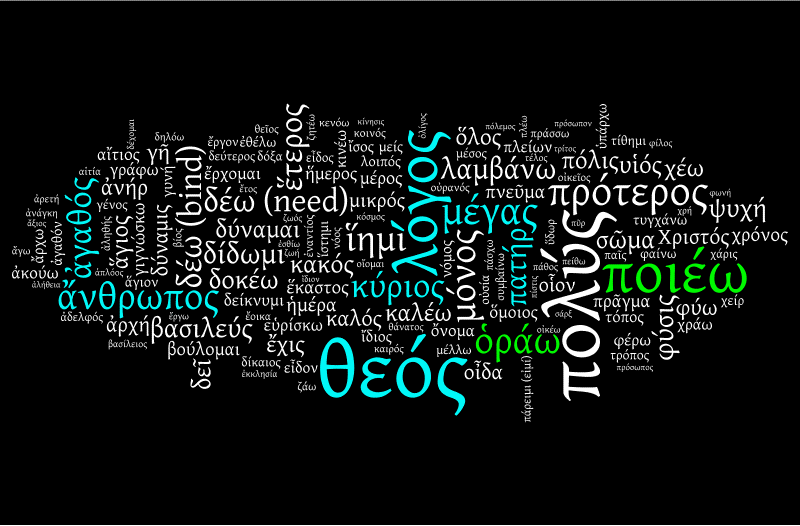
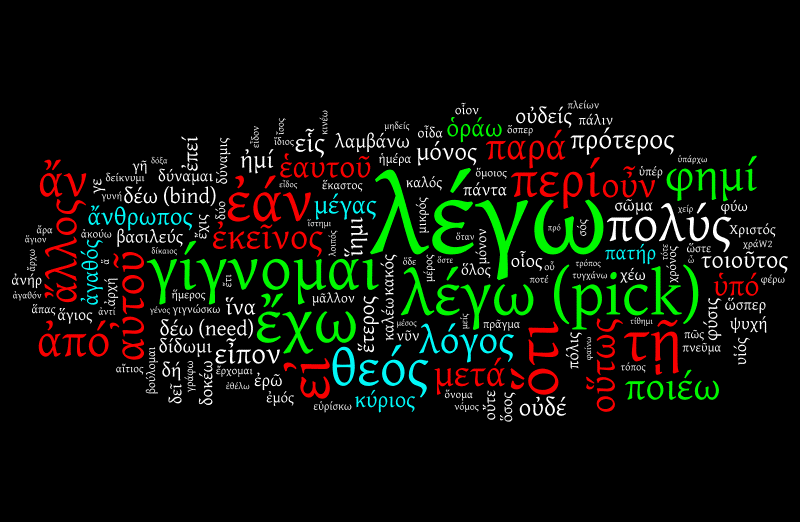
In the previous post, I used Wordle to illustrate stop words in Greek (and, by the by, the exponential distribution of function words following Zipf's Law). After getting rid of a whole bunch of stop words, I ended up with a Wordle of the lemmata of the TLG:

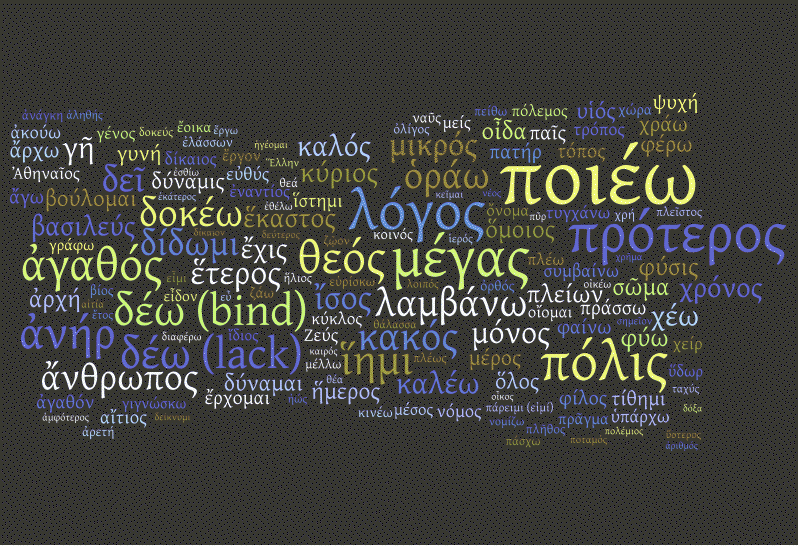
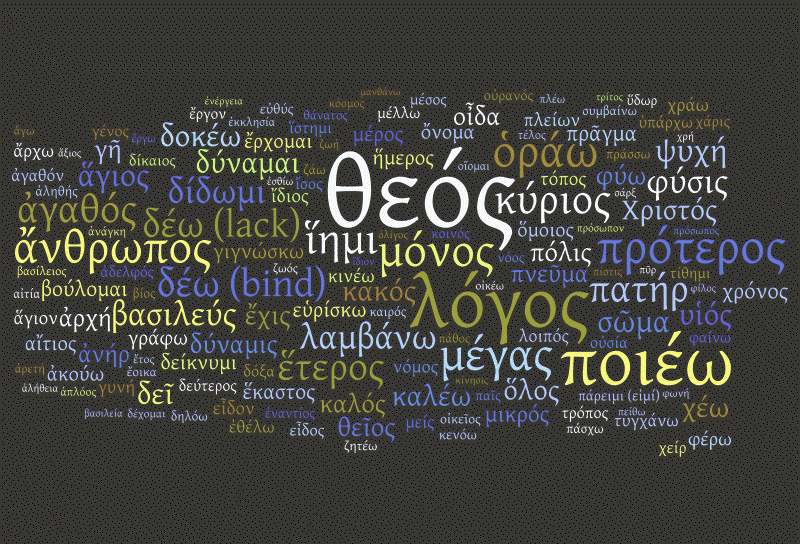
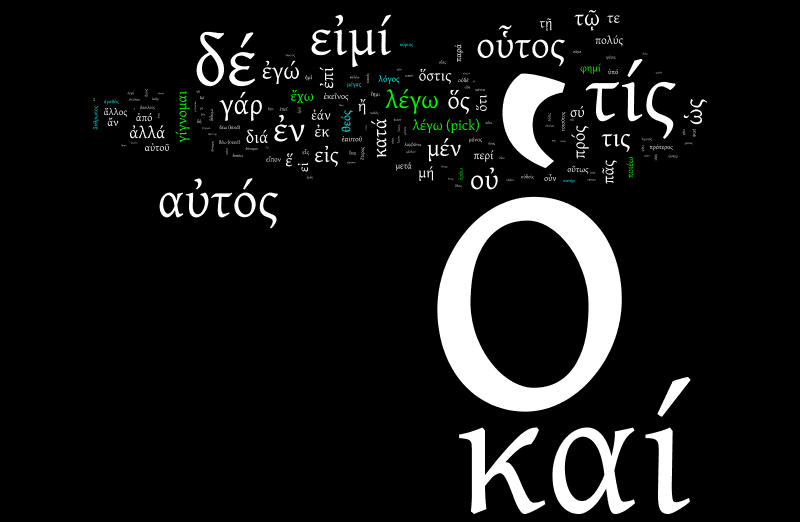
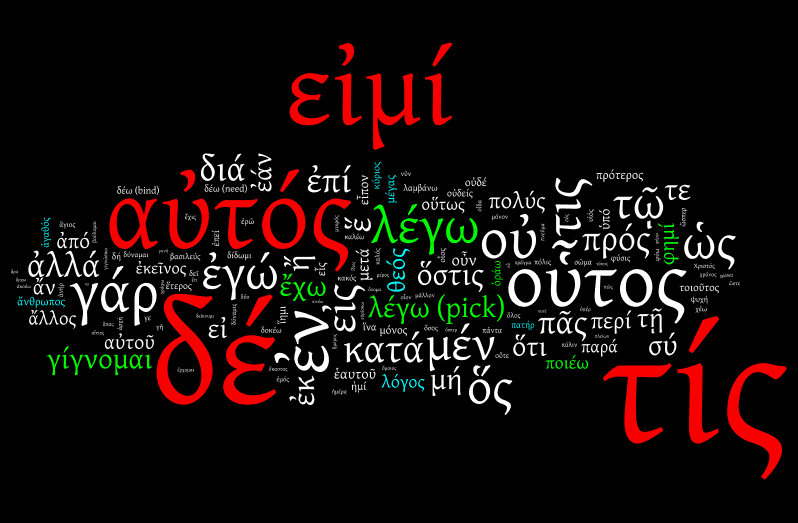
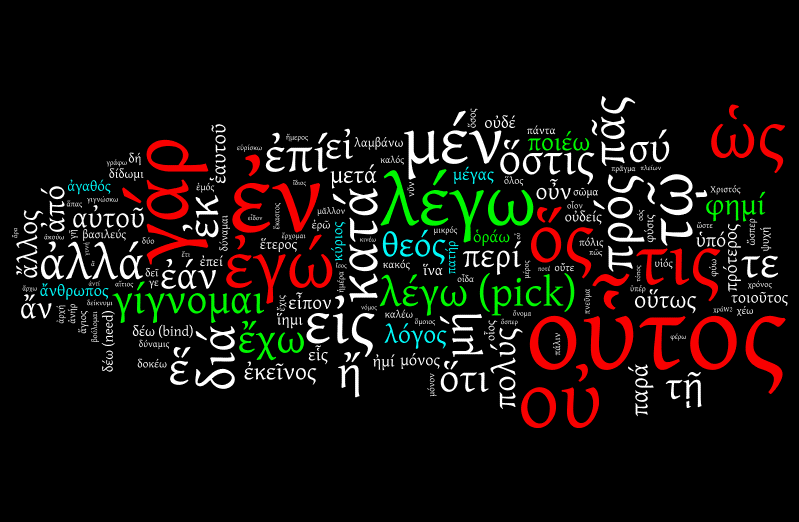
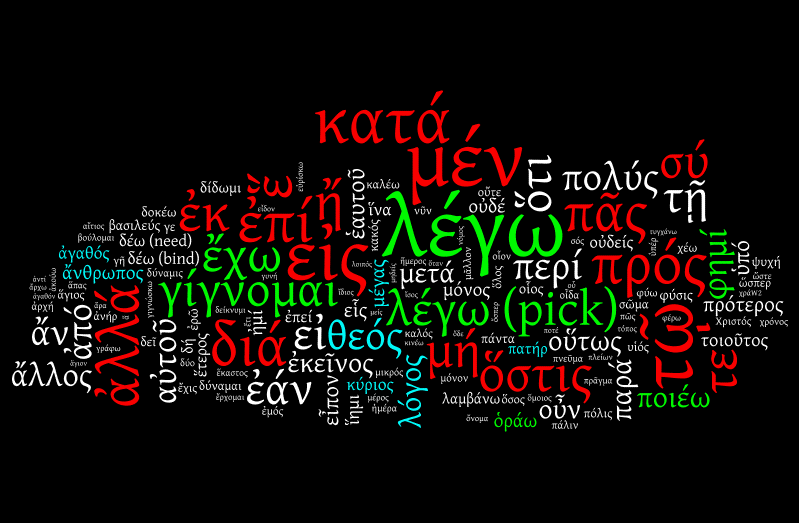
But I stopped short of making sense of the Wordle, because the TLG contains both Ancient and Mediaeval texts, and they talk about different things. I promised Wordles of the texts in the TLG from BC and AD, which will give at least a rough sense of the difference.

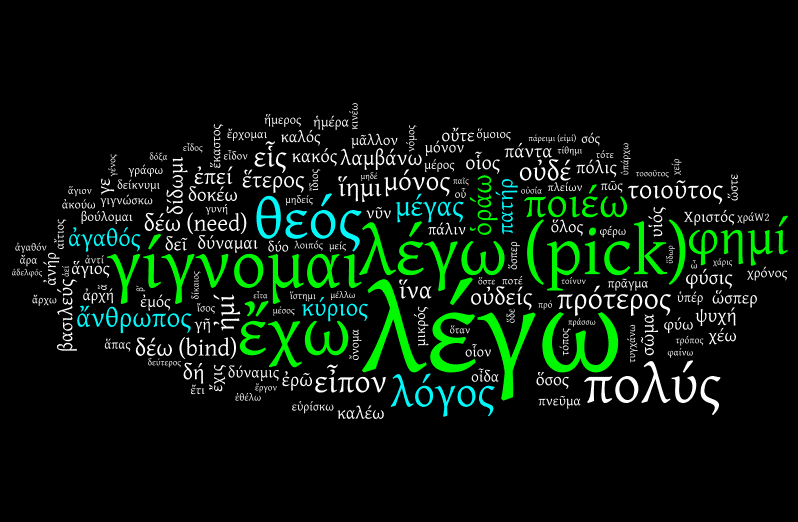
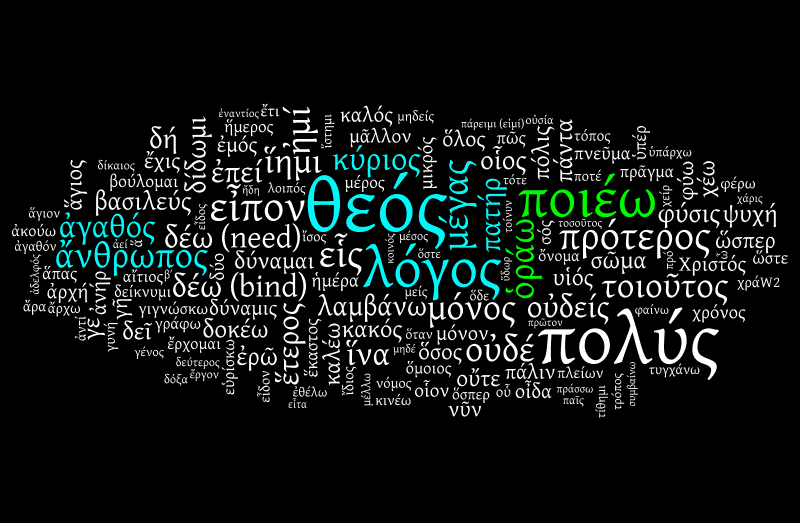
So here they are:


Images created by the Wordle.net web application are licensed under a Creative Commons Attribution 3.0 United States License.


The Wordle images are hyperlinked to the Wordle applets hosted there, so you can play with the applets by eliminating words. The stopwords are as before, but I also got rid of πολύς "much", which was crowding the BC texts a bit much.

A few things jump out quickly: there's a lot more God AD, as you'd expect (θεός), slightly more talk of "people" than of "men" (ἄνθρωπος, ἀνήρ), less talk of the City and more talk of power (πόλις, δύναμις).

But I'm not really a visual person, so I'm going to use more quantitative ways of working out the changes in vocabulary.

To begin with, the two Wordles show the 150 most frequent lemmata for each period, not counting stop words. These are the differences between the two—words in the top 150 of one period, but not the other.
Ancients talked more about...and less about...
Ἕλλην, Ἀθηναῖος, Ζεύς, ἀμφότερος, διαφέρω, ἑκάτερος, ἐλάσσων, εἶμι, εὐ, ἤλιος, ἡγέομαι, ἱερός, κεῖμαι, κύκλος, ναῦς, νέος, νομίζω, ὀρθός, οἶκος, πλέως, πλεῖστος, πλῆθος, πόλεμος, πολέμιος, ποταμός, θάλασσα, θεά, σημεῖον, ταχύς, ὔστερος, χρῆμα, χώρα, ζῷον Χριστός, ἅγιος, ἁπλόος, ἄξιος, ἀδελφός, ἀλήθεια, βασιλεία, δέχομαι, δηλόω, δόξα, ἐκκλησία, ἐνέργεια, εἶδος, φωνή, κίνησις, κόσμος, νόος, οἰκεῖος, οὐρανός, οὐσία, πάθος, πίστις, πνεῦμα, πρόσωπον, θάνατος, θεῖος, σάρξ, τέλος, τρίτος, χάρις, ζητέω, ζωή
Greek, Athenian, Zeus, both, to differ, either, less, go, good, sun, to lead, dawn, holy, to lie, circle, ship, new, to think, right, house, full, most, crowd, war, enemy, river, sea, goddess, point, fast, last, need, land, animal Christ, holy, simple, worthy, brother, truth, kingdom, to accept, to declare, glory, church, activity, form, voice, movement, world, mind, own, heaven, substance, passion, faith, spirit, face, death, divine, flesh, end, third, grace, to ask, life

The effect of Christianity on vocabulary use is pretty obvious. A few other changes are worth noting:
  • Byzantines nominalised a lot more than Ancients did. That's at last some of the reason for ἀλήθεια "truth" (instead of the more Attic τὸ ἀληθές "the true"), and it may relate to other nominalisations like κίνησις "movement" and ἐνέργεια "activity". (βασιλεία "kingdom" has a Biblical pedigree—but that is also because the Bible was not written in Attic.)
  • Many of the differences are a matter of language change, rather than different ideology. For all that most Byzantines did not write in the vernacular, their language was usually more akin to Koine than to Attic. That explains the absence of εἶμι, εὐ, ναῦς, πλέως, ἐλάσσων, ἱερός, πολέμιος (replaced by στέλλω, καλός, πλοῖον, πλήρης, μικρότερος/ὀλιγότερος, ἄγιος, ἐχθρός) "send, good, ship, full, less, holy, enemy", and presumably also the avoidance of ἀμφότερος and ἑκάτερος "both, either".


I've left out from those lists words that show up in the top 150 only because they're ambiguous with other legitimate words. (Yes, I should have pruned the Wordles.)
  • BC: δίκαιον, δοκεύς, ἠώς, θέα: rights, beam, dawn, view
  • AD: ἅγιον, βασίλειος, ἴδιον, κενόω, πρόσωπος, ζωός: sanctuary, royal, particularity, make void, face, alive

There's one further comparison I'll attempt: the words whose frequency changed the most between the two periods. To track this, I'm going to use the 2000 most frequent lemmata for each period—including both normal words and stop words; that constraint means we're only looking at words that are likely to matter. I'll go through the lemmata in those lists whose ranking changed by the greatest amount (e.g. from #1537 to #10342).

Because it's a pretty heterogeneous list—and different kinds of words tells us different things, I'll split them up into categories. (And I will do some silent suppressing of ill-recognised ambiguous words.)

These are the biggest shifts in proper names:
Ancients talked more about...Rank Shift
ἜφοροςEphorus-8530
ΠοσειδώνιοςPosidonus-8397
ΠελοποννήσιοςPeloponnesian-6655
ΑἰτωλόςAetolian-5399
ἙκαταῖοςHecataeus-5157
ΘεόπομποςTheopomus-5046
ἈπολλόδωροςApollodorus-4948
ΦωκεύςPhocian-4786
ΤυρρηνικόςTyrrhenian-4587
ΧρύσιπποςChrysippus-4043

Two things are going on here. First, some ancient authorities—primarily historians, if I read the names right—were of interest to several ancient writers, but of less interest to the Byzantines. They tend to be the historians whose texts didn't survive, which is related to them being of less interest to the Byzantines. (I don't know offhand whether that's cause or effect.)

Second, Greece was very important to Ancient Greeks, and so were the various regions of Greece. To the Byzantines though, Greece was a backwater, and the old regions did not survive into the Byzantine system of themes. So there was no reason to talk about Aetolia or Phocia outside of Ancient History; and less reason to talk about the Peloponnese than you might think, even while the name survived. The same goes for Tyrrhenians: it wasn't Etruscans that the Byzantines were having to deal with in Italy, but Lombards.

Ancients talked less about...Rank Shift
ΚύριλλοςCyril+214,509
ΚωνσταντινούπολιςConstantinople+214,399
ΓρηγόριοςGregory+214,391
ἈθανάσιοςAthanasius+214,154
ΓεώργιοςGeorge+85,856
ΚωνσταντῖνοςConstantine+47,064
ΠέτροςPeter+40,947
ΧριστιανόςChristian+36,162
ΒασίλειοςBasil+28,217
ΧριστόςChrist+23,988

The only surprise is that Christians turn in BC texts at all; there's only 5 instances though, and the dating of texts in the corpus is porous (late citations can appear as testimonia of earlier authors).

These are the biggest shifts in common nominals:
Ancients talked more about...Rank Shift
εὔδοξοςreputable-8805
κύλινδροςcylinder-6569
ἀσύμμετροςasymmetrical-5939
δημοκρατίαdemocracy-5389
πυραμίςpyramid-4714
ναυμαχίαsea battle-4274
κῶνοςcone-4205
παραλληλόγραμμοςparallelogram-3837
παρεμβολήinterpolation; encampment-3668
ψήφισμαdecree passed by vote-3194

If the AD texts have more theology, they clearly have a lot less geometry, and a lot less to do with representational systems of government. The drop in εὔδοξος is surprising, given it's in Plato; I wonder if the change of -δοξ- in compound from "reputations" to "glory" made the adjective confusing for later writers.

Ancients talked less about...Rank Shift
ἀποστολικόςapostolic+214,282
θεοτόκοςGod-bearing (Theotokos)+85,966
βάπτισμαbaptism+85,945
θεότηςdivinity+59,016
μόδιοςbushel+58,616
μοναστήριονmonastery+57,696
σεβάσμιοςreverend+57,691
αἱρετικόςheretic+35,602
χάρισμα(spiritual) gift+35,588
πατριάρχηςpatriarch+27,001

No surprises again; the only non-religious term is μόδιος "bushel", both as a vessel and a measure.

These are the biggest shifts in verbs:
Ancients talked more about...Rank Shift
διαπορεύωpass across-5939
βλώσκωgo-5710
εἰσοράωlook upon-4134
ἄημιblow (wind)-4113
κλύωhear-3392
ἐπιζεύγνυμιjoin to-3039
ἀμφισβητέωdoubt-2436
ἐφάπτωhang on-2122
ἱκνέομαιcome-2088
μεταπέμπωsend for-1974

Many of the missing verbs are poetic and/or dialectal, and would not have a natural place in Byzantine prose; that includes βλώσκω, εἰσοράω, ἄημι, κλύω, ἱκνέομαι. The surprise here is the vanishing of doubt in the Middle Ages.

... Yes, yes, the jokes just write themselves, I know...

Ancients talked less about...Rank Shift
ἐνάγωpersuade+10,366
βαπτίζωbaptise+8529
ψάλλωchant+5021
φανερόωreveal+3988
καταδικάζωcondemn+3483
φωτίζωilluminate+3308
περισπάωtake a circumflex+2948
βαστάζωcarry+2911
ἀνέρχομαιgo up+2809
προλαμβάνωanticipate+2769

I admit to being less sure about some the shifts here, such as ἐνάγω and προλαμβάνω. The Christian influence is clear in βαπτίζω, ψάλλω, φανερόω and φωτίζω. Language change accounts for βαστάζω and ἀνέρχομαι replacing φέρω and ἄνειμι, and I assume καταδικάζω for "condemn" replaced what came to look like more generic verbs, in καθαιρέω or καταγιγνώσκω. And unlike the Ancients, the Byzantines had to learn about polytonic orthography; so what word took a circumflex and what word took an acute was a matter much ink was spilled about.

Finally, these are the biggest shifts in function words:
Ancients talked more about...Rank Shift
τοτέat times-5796
αὖτεagain-4707
δισχίλιοιtwo thousand-4676
αἴalas-3334
πεντακόσιοιfive hundred-2859
ἠέor-2844
νή[I swear] by [deity]-2663
διακόσιοιtwo hundred-2597
μάyea-2470
πωyet, at all-2466

There is some Epic dialect here, in αὖτε and ἠέ; some strictly Attic rather than Koine words in τοτέ, πω, and δισχίλιοι; and a rather different approach to exclamations, with the old oaths by the Gods dispensed with, and the ai!'s of tragedy avoided in theological discourse. (There are 2100 instances AD of φεῦ "alas"; maybe αἴ was too specific to tragedy? *shrug*) Not sure why the written-out 500 and 200 were less popular. Maybe the armies just got bigger, so historians talked in the thousands instead of 300...

Ancients talked less about...Rank Shift
ἀμήνamen+19,195
νάto (Modern Greek)+18,984
ἀλλαχοῦelsewhere+7689
δηλαδήthat is+7587
ἤγουνthat is+6367
ιζ΄XVII+4541
καθόinsofar as+4524
ιϛʹXVI+4001
ιηʹXVIII+3727
ιδʹXIV+3196

It's obvious why amen is there; it's also obvious why να, the Modern Greek equivalent of the ancient infinitive inflection, is there. ἀλλαχοῦ for "elsewhere" is attested in Sophocles and Xenophon, but it became prevalent much later, and LSJ reports that Moeris proscribed it as vernacular, in favour of ἄλλοθι. The other conjunctions are run-in phrases, which Byzantine texts in general are rather more sympathetic to treating as single words than are ancient texts: δῆλα δή "so [they are] obvious", ἤ γε οὖν "or indeed then", καθ’ ὅ "according to what".

Finally, the numerals aren't there because the Byzantines were more numerate than the Ancients. After all, the Byzantines had given up on geometry, from what the counts tell us. (And that's a silly enough thing to conclude that you should not take much of this too seriously.) No, the reason there's a whole lot of XVII's and XIV's in the AD corpus is that there are a lot more chapter headings in the theologians...
...Read more

2010-01-31

Wordle and Greek stop words

Some of you may be familiar with Wordle, an online tool which displays the words in a text with different sizes, depending on their frequency. Wordle is a convenient tool for seeing what the frequently mentioned concepts are in a text, so it gets a fair amount of use in blogs. It's the same concept as Word Clouds; but done with much more typographical finesse. This, for instance, is Wordle run over the English text of Plato's Republic:


And courtesy of The Crazy Australian, this is the ESV New Testament:

(As The Crazy Australian noted, you can learn one thing immediately from that: the Third Person of the Trinity doesn't get as much stage presence as the Other Two in Holy Writ. Not really a surprise, but the point of Wordle is as much to visualise the obvious as it is to discover the not as obvious.)

Wordle works quite well with English, because most words don't have a lot of inflection, to multiply the instances of the concept you're looking for. In a language like Greek, on the other hand, lemmatisation—or as it's more often called in search engines, stemming—is essential. Otherwise, you get not one instance of "Jesus" or "state", but four or five, with no material difference.

Funnily enough, I do lemmatising. So what happens when you put the TLG through Wordle?


Images created by the Wordle.net web application are licensed under a Creative Commons Attribution 3.0 United States License.


Well, what you get is this:

I've highlighted the top seven verbs in green, and the top seven nouns in green. You can see the nouns, right?

Of course you can't, because there's a whopping great big ὁ and another rather outsize καί there, crowding everything else out. And being told that Greek texts have a whole lot of instances of the and and is unlikely to be what most people are curious to know.

What we have here is the notion of stop words: grammatical words that don't convey a lot of content, and which search engines traditionally ignore. Wordle also ignores them, which is why you don't see a lot of the and and in English-language Wordles. But Wordle doesn't happen to be configured for Classical Greek.

So what happens if we whittle away at the stop words? Let's do this slowly. We'll start by getting rid of ὁ and καί.

Woah. Where did all that come from? You can see something now: θεός, λόγος, and if you really squint, ἄνθρωπος. But that's still making life too difficult, because there are more stop words to dismiss. I've highlighted the next batch in red: τίς, δέ, αὐτός, εἰμί, who?, but, he/himself, be. Of these, τίς "who?" is inflated through ambiguity with τις "someone"; because the lemmatisation is not disambiguated by context, a few word counts are more sizeable than they should be.

With those four out of the way, we have:

An improvement; you can see ἄνθρωπος now, and maybe even πατήρ "father" next to θεός "god". But we still can do better. We have eight more stop words that we don't really need to hear about: ἐγώ "I", ὡς "as, that", ὅς "who, that", τις "someone", οὐ "not", γάρ "because", ἐν "in", and οὗτος "this".

With them left out, we have:

Still better: you can make out ἔχις "viper" now, at the bottom left hand edge. Not that Greeks spent a lot of time talking about vipers; they just spent a lot of time using the verb ἔχει "has", which happens to be ambiguous with the dative of ἔχις. It's automated lemmatisation, this kind of thing can happen.

We have sixteen more stop words, and as you may have worked out, the easiest criterion is to bundle up all function words—prepositions, adverbs, conjunctions, interjections, pronouns. With some of the ambiguity inherent in the venture—is πᾶς "every" a pronoun or an adjective?—but we can keep slicing nonetheless:

And again:

We're not making as much of a difference now; but notice that the screen is being crowded out by verbs: λέγω "say" (and "pick", as a synonym that used to be the same verb—just like "count" and "recount" in English); γίγνομαι "become", ἔχω "have". These are verbs, and are properly considered content words. But I already got rid of εἰμί "to be" (which as a copula is not a content word; and I'm happy to also throw out "have", "become" (close to a copula itself), and verbs for "say". (There is a lot of "he said she said" in the TLG, because there is a lot of narrative.)

If we get rid of those verbs?

And tidying up getting rid of the next hundred and fifty function words, which are a distraction as you squint for content:

You could argue there's still some guff there: ποιέω "do" doesn't tell you much more than ἔχω "have", and πολύς "much" doesn't really deserve its disproportionate size. But we have enough cleaned up that we can say now something about what the texts talk about. It's certainly a sight better than this:

So what do the TLG texts talk about? You may well be starting to come up with ideas if you can read Greek. But before you do, remember that there a whole lot of Christian texts in the TLG, and they quantitatively crowd the ancient texts out. The texts of John Chrysostom alone in the TLG are almost as sizeable as all surviving Ancient literature between Homer and Aristotle.

So yes, the TLG as a whole talks about God and logos a fair bit. But we'd expect that of John Chrysostom; it doesn't mean its what Plato or Homer talk about.

What'd be useful is to split up the corpus, say BC and AD, and see how they differ. Sounds like the next blog post to me...

Btw, I've been stamping out stop words, but stop words are of interest if you're looking at grammar; and Nikos Sarantakos did ask me to pony up the word counts that I was tossing out. So, for the TLG and the lemmatiser as of last night, these are the twenty five most frequent lemmata of Greek, with their textual frequency:
πᾶς534,845every
ἕ547,255he
ἀλλά548,203but
διά561,813for
ἐπί566,238on
πρός566,476towards
κατά643,767by
εἰς694,035to
τῷ732,938therefore (ambiguous with "to the")
μέν762,890on the one hand
ἐγώ767,104I
ὡς771,416as, that
ὅς801,401who, that
λέγω811,330say
τις834,155someone
οὐ926,059not
γάρ951,810because
ἐν1,128,716in
οὗτος1,228,627this
αὐτός1,646,014he, himself
εἰμί1,704,651be
δέ2,265,028but
τίς2,624,172who?
καί5,765,491and
ὁ14,335,717the

Of the lemmata we have not thrown out, θεός "god" is the 39th most frequent, with 388,933 instances.
...Read more